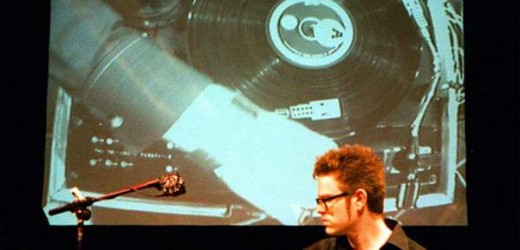
Desde hace unos años que los sonidos electrónicos que cotidianamente nos rodean captaron mi atención intensamente. Su universo infinito de texturas sonoras internas cambiantes me inspiraron horas de investigación y exploración para mis composiciones y presentaciones en vivo.
Partiendo del “error” de la consola misma, conectando cables de entrada donde irían los de salida y sin agregar ningún instrumento externo, sino usando el propio circuito interno para generar los llamados “ruidos”, trabajo en tiempo real de manera analógica. En la llamada era digital no es casual que utilice aparatos analógicos, sino que es el punto de partida hacia mi investigación de herramientas que van perdiendo fuerza en el mercado y uso profesional. Trabajando como si fuera un artesano sonoro, generando diferentes sonidos, modificando sus texturas por medio de ecualizaciones, trabajando de manera contrapuntistica por la sumatoria de varios canales, construyo el discurso y la forma musical.
El control minucioso del material sonoro y de los movimientos mecánicos del instrumento es parte fundamente de mi forma de trabajo, ya que el comportamiento de la consola es caótico y casi aleatorio, exigiendo un interprete atento a los cambios mínimos, evitando todos los movimientos bruscos posibles.
Getting into December, we are glad to receive the work of american artist Tsone. We first met him while building up our 25th release, Circles Around The World. Gladly surprised by the consistency of his oeuvre we asked Tony Obr to work out an album for Audiotalaia. Finally, here it is this A Sea Beyond Reckoning.
This album has been conceived as a closed project in which all the elements forming that release are interconnected and related to each other in terms of compositions and sound design. Asking the artist about this work he stated the following:
These works were primarily composed and arranged using a battery of custom built software instruments and effects. I designed the software to function as complex interconnected systems that allow creation to emerge. In this sense much of the aesthetic agency is given over to the systems themselves. Each composition becomes its own environment with its own internal logic which enables the fundamental qualities of a sound to blossom and develop into elaborate structures.Â
Jay Hardin is in charge of the artwork for this release. He has worked out a series of graphite and charcoal drawings trying to build an image for the compositions.
Butafor is a work by Gusev K.P. from Russia. He uses a modular technique to generate a subtle and sparkling electronic music.
According to the artist, the approach to each track is based in modules of different duration, consisting at minimum a single note and at the most a few seconds of sound, united by composition and choice of musical instruments.
Credits:
All songs composed and recorded by Gusev K.P., Russia, 2010.
Guilty C. has been chopping noises and hairy infants in the funeral mountains of the Nara prefecture for quite a while now, leading an errant life among vegetable dumplings, agoraphobic trees and necrophagous cunts. “Rest In Peace In Town” on the Circle side is the last blow of the paraplegic sword art mastered to overcome his incommensurable fights against the castrate humongous pot-bellied pig’s mafia and the dolphin men’s despotic oppression towards self-taught illiterates, producers of infected fair trade papaya and empowerment in clinical practice.
Brain dead for 3 years after attacking the Undertaker with an ax while trying to water his datura field with a foam extinguisher on the threshold of a new world, Pato survived his lethal wounds thanks to a nano chip interfacing with his cerebral tissues and developped in secret by his Formula 1 team during an internship as cabine crew member for an Afghanistan lowcost airline company. Mixing TO7 computers, modified Boeing A320 aircrafts and manipulated spring sand of the Costa Brava, “Brace Brace” on the Triangle side was recorded after Pato’s recovery and rings out like a cursed sound fascination for squid and dragsters.
The exogalactic overriding aorta artwork of this new LPM publication was entirely designed by the fireproof genius Zeke S. Clough and printed in Risograph by Manymono in London. Cut as usual so far by Rashad Becker at Duplates Berlin.
Solid white 7″ with b/w labels, 45rpm, ltd.300ex.,
hand-stamped & numbered, 3-colour Risograph artprints, 10eur
courant.air is the continuation of a body of work intertwining instrumental and electronic music following the acclaimed 2004-2008 work les arbres (Mention, Prix Ars Electronica 2009).
The mixture this time is more edgy : a rich and complex electronic sound composition alongside the folk inspired guitar played by Simon Trottier (member of the extraordinary haunted blues band Timber Timbre). After 2 albums of improvised folktronica with Simon Trottier, Nicolas Bernier decided to explore that singular mixity further in a formal compositional context. This time, Trottier is interpreting the music written and scored by Bernier.
Conceptually, the piece is wind powered. Wind as a constructive/destructive agent. Wind as an agent of travel (oh! the sailing ships of Jacques Cartier). Wind as a propulsion engine of particles in constant movement in the air. Wind as noise. Wind is sound. Wind and music are Invisible.
“Scelsi Remix: 7 Mantras” was composed in April 2010 as a collection of seven short quadraphonic interludes to interweave a monographic concert program of the ensemble S@x 21 (saxophonists Pablo Coello and Rafa Yebra) with music of the Italian composer Giacinto Scelsi (1905-1988).
The 7 Mantras are related to the 7 Chackras of the Hindu tradition, each one associated with a different color whose light frequency has been transposed down to the audible range to serve as the fundamental tone to each of the 7 short pieces here presented.
For this release, I prepared them together, so they now constitute a single, gapless piece. In order to remain as faithful as possible to the original composition and to the space in which it was played, this release is mixed down to stereo using binaural technology, therefore it is best rendered when listening to it with headphones.
Ángel Faraldo
Track list:
1- Lam (3’37)
2- Mam (2’12)
3- Ram (2’07)
4- Yam (2’36)
5- Ham (1’32)
6- Om (2:02)
7- Aum (3:41)
The Italian sound experimentalist/ industrialist Maurizio Bianchi/M.B. needing not any introduction comes here reissued.
“NH/HN” is one of M.B.’s earliest tapes, recorded and released back in September 1980. Not to be confused with the “Nervo/Hydra” tape (1981) which was ilegally reissued by several labels which wrongly entitled them as this one.
Synthesizers, radio transmissions, concrete noises and weird vocals are the elements used on this recording by M.B. to create a parallel reality of pure dehumanization. Anti-musical Experimental Noise and old Industrials are two of the many tags which would work for the sound of this release.
Packaged in a foldout heavy paper cover with the disc attached with a hub button. Edition of 200 copies.
2 tracks / 40 minutes Length.
How these mystical artists find their way into the realms of JNN is beyond me sometimes, but behold; this âSea of treesâ will astound you. But before we talk of this album here, letâs share a previous review of âInsectâs Brainâ shared on Touching Extremes;
âa little more than 31 minutes of very interesting âbruit artâ by Geneva-based Ludovic Guerry, who manipulates ânoises, field recordings and many weird soundsâ in seven personal definitions of a peculiar world of embryonic utterances and disembodied dreams about the inhospitality of life.â
Eric Miller’s Sinter consists of six five-minute pieces bound together by digital proximity, conceptual conceit and overarching process. Each of the discrete elements of this suite of pieces has been composed using the same software (a program created within MAX/MSP) which imposes the same structure upon the source material fed through it – only the source material changes after every five minutes. A beautifully sparse series of trance-inducing rhythms is the result, with some source material pulsing like a Steve Reich composition pressed through a burlap sack, while other pieces sparkle like distant star clusters.
Dragos Tara and d’incise are two higly active improvisors from the french-speaking part of switzerland.
Dragos has a strong background as composer for instruments and electronics, he takes part of the
Rue du Nord collective that organises many concerts and an annual festival in Lausanne.
d’incise works in the electroacoustic fields, composed and improvised, he is the half of the diatribes duo and coordinates the Insubordinations netlabel.
They’ve played togheter in many one-shot formation! ss since a couple of years.
In novembre 2009 they made a trip to Paris and joined for a concert the amazing alto saxphonist Christine Sehnaoui Abdelnour.
Christine has develloped since 1997 a strong personal language, deeply sensitive, expanding new techniques and complex patterns, exploring the microtonal aspects of the saxophone or its high-pitched tone that sounds like electronic tones made on an acoustic instrument.
The music that came out of this meeting is dense, the perception of the instruments is perturbate by thier constant roles changes, each being able to be pecussive, tonal or textural at any time.
After the trio with Phonotopy, but recorded a couple of month earlier, Diatribes proposes with Abdul Moimême a new electroacoustique oriented album, where the instrumentation distinction is lost to the benefit of a sounds ensemble strongly linked by skeazing ropes and under permanent tension. Some metalico-organics imporvisations develloping under harbour influence, superpostion of poetic evocations like an high-tech nostalgia.
DIATRIBES:
Diatribes, a strongly libertarian ensemble, began its existence in a Geneva basement in Winter 2004. Adapting the improvised and experimental music languages of today, the duo is highly reactive, dynamic, percussive and/or textured. Initialy a trio, diatribes became a polymorphous formation, accuratly incomplete, extending each time its spectrum with guest musicians, from freejazz to electroacoustic improv, from loud sound wall to intimistic acoustic details, crossing the road of Barry Guy, Keith Rowe, Jason Kahn, Jacques Demierre, Christian Weber, Ernesto Rodriguez, Tomas Korber, Jean Bord�, Mick Beck, etc, travelling through europe to create new entities, with Adbul Moim�me in Portugal, Hannah Marshall in England, Rafal Mazur in Poland or HKM+ in Germany.
ABDUL MOIMEME:
Abdul Moimême is an active member of the Portuguese improvised music scene, playing regularly with the “Variable Geometry Orchestra” and “Suspensão”, two groups led by violin player Ernesto Rodrigues. He is also member of the Granular collective.
In 1999 he started writing jazz critique in various Portuguese publications including “Flirt”, “All Jazz”, and Jazz.pt magazines, as well as “Publico” newspaper. In 2006 he created “Freemusic”, a blog exclusively dedicated to the promotion of Portuguese improvised music.
In 2009 he published “Nekhephthu” [Creative Sources CS-102], a solo prepared electric guitar CD
abdul moimême: two prepared guitars, metalic objects, springs, cymbals, metronome d’incise: laptop, objects, various instruments, snare drums, bow, cymbals, gramophone cyril bondi: drums, percussions, bow, cymbals, objects, small instruments
1. s’amarrer mp3
2. crustacés mp3
3. complainte de marée basse mp3
4. voile et vapeur mp3
5. entre les haut-fonds mp3
6. pavillon noir mp3
7. naufrage mp3
Download the complete album in .zip: click here.
(47min08 / 320kbps mp3 / 124Mo)
recorded in Lisbon, august 28 & 29, 2009.
mixed by d’incise.
masterised by Wolfgang Rüfenacht.
font design by Sonia/.
Edited as 500cd, 18x14cm print in thin sleeve, it can be ordered through our online distro, Mitenand, or directly with the following paypal button. [15chf/10euros/14usd, worldwide shipping]
suRRism-Phonoethics is amazed to release the first Impromeetin’!
- Impromeeting is a meeting place for the improvisation of sound artists from different artistic disciplines where they offer their live shows as a form of collaboration, experimentation and fun.
- Impromeeting accommodates musicians and non-musicians, narrators, poets, electronics, sound art, djing, turntablism or any other form of creating sound and noise from the point of view of experimental music.
- Impromeeting aims to promote sound and musical improvisation as a way of understanding live performances and music experiences.
- Impromeeting attaches importance to the risk and chance assumed by the participants when they improvise.
- Impromeeting is organised by Mauri (producer, artist and dj). Its first event was on 19th August, 2010 in Gijón (Spain) with 4 artists from different musical styles (were first improvising in pairs, and ended up playing all together).
- Impromeeting facilitates the registration to participate via internet.
*
Elías Merino (with a computer, an electronic violin, a glass container with insects inside, and a customized radio).
Cucumber man (with a computer).
Galgo (with a guitar and sampler).
Mauri (with an elastic band in a turntable, a sampler, and a pair of amplifier pastilles).
This is the second release from Chris Whitehead on Electronic Musik.
Chris tells me – The set is called 100 Birthdays. It was recorded in a tube station in London, a bookshop in Scarborough, a park and art gallery in Whitby, and aboard a dying space station hurtling towards Jupiter.
Recorded Live at NK (Berlin) in January 2010
Mixed at the Maizing Studio (Paris) in May 2010 by Anton Mobin
“LE GRAND FOUTOIR” is a game of improvisation pulled in dices, guided by a “referee”.
It takes part in the regular events organized by the collective H.A.K.
For the fifth edition, Le Grand foutoir had settled down in NK, Berlin Neukolln
on the delicious invitation of Julian Percy.
Laimonas Masevičius: tuba. Recorded in the studio of Lithuanian Composers’ Union in January of 2010.
Once I was picking mushrooms in thick Polish forest and i found this mushroom called Borowik Szatana. Encounters with Satan always leave long lasting impressions. A bit later I came up with the concept of Polish Roulette which is simple – “go to the forest and eat the first mushroom you find there”. This piece sounds better if sped up substantially. Dedicated to Krzysztof Gutfranski.
Dough
Lina Lapelytė: violin; Tuto Ensemble: kanklės, birbynė, barškutis.
This piece was recorded live in an open-air concert which celebrated City of Vilnius as an European capital of culture in June of 2009. If listened on high volume (and preferably on headphones) then in the beggining it‘s possible to hear faintly somebody saying “Ė, nachuj” and in the end, together with the applause, one can hear an audience member saying “Ačiū už pabaigą, blet”. Let it never be translated into english language but rather kept preserved as an unique stratum of our complex cultural heritage. This piece is dedicated to Birutė Asevičiūtė who commissioned me to write it.
Violin, Viola and Untitled
Lina Lapelytė: violin; Kęstutis Pleita: viola.
Recorded live in Marių Klavyrai festival in Klaipėda in October of 2003. This piece could be approached as an exercise in several kinds of superimpositions in micro and macro levels. Micro level is taken care by computer which multiplies the same layers of extremely short loops and superimposes them on top of each other – this way producing minimalistic variations of timbre. Macro level is intended for harmonic explorations which is carried out by string instruments who play the canon of identical harmonic series. This piece is dedicated to an empty room.
Widna
Seth Josel: guitar; Eva Zöllner: accordion.
Recorded in “Studio 10 0 10” in Berlin (sound engineer Jacopo Carreras) in December of 2009.
“il Widna” means “an ear” in Maltese language. In Polish it means “bright”. Somehow this reminds me of the title of my recent exhibition called “Transparent Ears”. But this long piece is in no way transparent nor related to my visual arts. Dedicated to Miguel Carvalhais.
Inspired by similar projects on the net, the electro-music.com Field Recording Project challenged users to create original compositions from the existing field rec archive. Participants were limited to field recordings as the only sound sources, but could chop, mutilate, and process with effects to the heart’s desire.
This is simply a creative project to celebrate our wonderful archive of sounds from around the world.
Cho and The Martyrs Like Eric and Dylan: I Let My Hard in Virginia (Niopo Poreri mix): Play in Popup | Download
Cho and The Martyrs Like Eric and Dylan: I Can(‘t) Hear My Self (Lunar mix): Play in Popup | Download
Cho and The Martyrs Like Eric and Dylan: Benzoyl Peroxide (EHS mix): Play in Popup | Download
Cho and The Martyrs Like Eric and Dylan: Las Ruinas Circulares (Guilherme Darisbo mix): Play in Popup | Download
Cho and The Martyrs Like Eric and Dylan: MartyrX (Concupiscencia mix): Play in Popup | Download
Cho and The Martyrs Like Eric and Dylan: La Arquitectura del Exterminio (Oil For Food mix): Play in Popup | Download
Cd cover art:: Download
English
Art in noisE
Way too often in Italy “noise” music has been linked to rock or dark genres, and, much worse, to the right-wing political fringe.
However, these are mere prejudices typical of our country, still underdeveloped from an arts point of view, as every noise-musician is well aware of.
In fact, major unsung artists like Luigi Russolo, Pietro Grossi and Maurizio Bianchi, make Italy play a lead role in contemporary music.
The maybe idealistic purpose of the project called “Arte nel rumorE” (literally, Art in noisE)
is to spread the concept of “noise-in-music” throughtout our country;
As a start, we are going to release come music compilations by the italian artists involved in the project, who will also deal with the theoretical side of noise music, which we think is the base to understand any kind of non-entertaining form of art.
Italian artists and NetLabels who share our ideals are welcome to partecipate in the project with their own works.
Arte nel rumorE compilations will appear on as many NetLabels as possible, under a “CREATIVE COMMONS” license,
to state once again that art is not for sale!
ITALIANO
Premessa:
Noi siamo contro il razzismo la xenofobia ed ogni forma di discriminazione, se non siete d’accordo con la nostra politica vi preghiamo di non chiedere la nostra amicizia.
Ancora troppo spesso in Italia si è portati a considerare il rumore in musica un genere che ruota attorno al rock, più o meno duro, o al filone dark, spesso addirittura associato politicamente alla destra più estrema. Come ben sa chi fa musica utilizzando il rumore, questi sono tipici pregiudizi che nascono in un paese artisticamente piuttosto retrogrado come il nostro. L’Italia ha nella storia della musica contemporanea un ruolo fondamentale, grazie a geniali figure come il Futurista Luigi Russolo, Pietro Grossi e Maurizio Bianchi, tutti e tre quasi completamente sconosciuti al pubblico italiano.
Qui non si tratta di sviluppare l’orgoglio italiano, cosa aberrante che sta tornando di moda nel nostro paese, ma più semplicemente di dare il giusto spazio al genere musicale noise, genere in cui l’Italia ha storicamente un’importanza riconosciuta in molti paesi stranieri, ma quasi del tutto sconosciuta nel nostro.
Arte nel rumorE è il nome di un progetto il cui utopistico scopo è quello di diffondere maggiormente il rumore in musica nel nostro paese. Come primo atto si è pensato di produrre delle compilations di tracce sonore composte da musicisti italiani, i quali sono invitati a dare anche una propria definizione al suono rumore, per sottolineare il fatto che il progetto Arte nel rumorE non si limiterà alla sola produzione musicale, ma cercherà di proporne anche lâaspetto teorico, base fondamentale per conoscere ed apprezzare qualsiasi genere di Arte che non sia puramente dâintrattenimento. Il progetto compilations è quindi aperto a tutti i musicisti e NetLabes italiane che ne facciano semplice richiesta di partecipazione, e che ne condividano gli utopistici ideali. Infatti le compilations Arte nel rumorE saranno promosse non da una sola etichetta, ma da tutte quelle che decidono di prendere parte a questo progetto, e questo è sicuramente un altro aspetto estremamente interessante ed innovativo.
Chi siamo? Un pugno di idealisti, visionari, utopisti. Noi vogliamo cercare possibili strategie che consentano la sopravvivenza intellettuale e culturale dei soggetti sensibili. Noi siamo convinti degli effetti benefici della condivisione e della collaborazione, rifiutiamo la logica della competizione e del profitto, tutte le proposte a nome Arte nel rumorE saranno licenziate sotto CREATIVE COMMONS, per ribadire in modo netto che Arte non è commercio, e che l’artista non produce nulla di originale, ma molto più concretamente prende dal mondo che lo circonda tutti gli elementi che andranno a comporre la sua opera, quello che è originale in ogni espressione artistica è l’individuo che da forma all’opera d’arte.
Il progetto Arte nel rumorE prende avvio dalla produzione e promozione di più comiplations musicali, ma vuole proseguire il suo utopistico viaggio dando vita ad un Gruppo di artisti i quali promuoveranno sotto la medesima etichetta differenti progetti.
W IL RUMORE!
COMPILATION ARTE NEL RUMORE VOL.III TRACK LIST:
Traccia 01 Pirophonia by Mare di Derac, Carlo Quaglia, lewitt [sp1], Eric de Cordier; www.myspace.com/maredidirac
Riflessione sul suono-rumore:
” In questo tempo il rumore deve essere superato, si deve tenere ben presente che gli artisti che ne hanno splendidamente fatto uso in passato rendendo l’avanguardia sonora, nel nostro paese e negli altri, illustre e geniale;
ora sono morti ed i morti si onorano, ma non si emulano eccesivamente. Marinetti scrisse così nel suo manifesto “I più anziani fra noi, hanno trent’anni: ci rimane dunque almeno un decennio, per compier l’opera nostra. Quando avremo quarant’anni, altri uomini pi giovani e pi validi di noi, ci gettino pure nel cestino, come manoscritti inutili. Noi lo desideriamo!”. Noi signori miei tutto questo lo facciamo con grande tenacia, i nostri macchinari che creano le nostre frequenze, superano i limiti della coscienza fino ad ora raggiunta! La Pirophonia è parte di questo concetto. Il suono del fuco è il connubio tra la distruzione di ciò che è passato e la consapevolezza di ciò che verrà! Il Nulla! La Cenere! Il rumore non distrugge per creare, poichè esso già crea mentre distrugge! la nostra creazione sta in questo, il fuoco e simbolo di ciò che possiamo fare, di ciò che sviluppa l’uomo senza lasciare traccia del suo passaggio. L.Nascitari”
Traccia 02 Le Triomphe Hermetique by cut/e; http://www.myspace.com/cutxx
Riflessione sul rumore:
RUMORE:
In un epoca in cui c’è tanto rumore che è nulla
e di costretti silenzi, echi di esplorazioni sonore scuotono attraverso il rumore coscienze addormentate.
Sante Cutecchia [cut/e]
Traccia 03 Live in Artica Festival 2010 by Les Mistons; http://www.myspace.com/544556914
Riflessione sul Rumore:
Noi viviamo nel rumore un semplice rumore bianco a volte rosa ci accompagna nei momenti di silenzio, le nostre città, le nostre campagne, i
nostri macchinari più obsoleti sono pieni di rumori. I nostri corpi fanno rumori, la nebbia è rumore, il gas è rumore, il caldo ha un rumore il freddo ne ha un altro. Non ci resta che farne uso, perche è nostro ci appartiene, dentro il rumore c’è il frastuono più assordante e nel frattempo il silenzio più assoluto. Insomma il rumore è un’ermetica UTOPIA in continua rivolta.
Traccia 04 SHUNYATA by Suburban Howl; http://www.myspace.com/suburbanhowl
Riflessione sul rumore: Rumore è:
il grido, l’urlo, il pianto…prima della Grande Pace
Traccia 05 SKYZOFRENIA by Desolandia Express: http//www.myspace.com/desolandia
Riflessione sul rumore:
DesolandiaExpress celebra il rumore che divenne caratteristica di una intera sottocultura, quel fragoroso strisciare di una puntina metallica nel solco di un vinile, lo SCRATCH!
Il giradischi diventa srtumento musicale e i vinili incisi sono un catalogo antropologico di rumori organizzati in armonie e scomponibili in qualcosa di unico.
Diretti, ritmici, ipnotici, se la “canzone” è pura arte sorella della pittura, gli scratch sono per DesolandiaExpress la versione a fumetti della “musica”.
Traccia 06 Buio Cantina by Pusio: www.myspace.com/pusio93
Riflessione sul rumore:
OGNI RUMORE E’ RICONDUCIBILE AD UNA NOTA MUSICALE; OGNI NOTA MUSICALE, OGNI TONALITA’ RAPPRESENTA UN’EMOZIONE, UN SENTIMENTO; QUINDI IL RUMORE E’ UN’EMOZIONE.
Traccia 07 Live in High Foundation 2010 by Le Strida: www.myspace.com/crocemassimo
www.myspace.com/alfonsosantimone
Riflessione sul rumore:
Probabilmente nella rappresentazione del mondo la musica è paragonabile alla geometria euclidea, il rumore e alla geometria del caos.
In parole semplici certa musica, prevalentemente quella euro-colta successiva al XVII secolo e precedente al XX secolo fondata sull’armonia tonale e sulla tonalità allargata degli ultimi scampoli del 1800, è come la geometria eucliudea, chiara e ordinata, mentre le musiche sviluppate successivamente e il “rumore” nel senso russoliano del termine, inteso nel senso di un’architettura sonora complessa e irregolare, sono come la geometria del caos, un’ affascinante prospettiva che ha avuto il merito di aprirci ad un mondo completamente nuovo e tutto da esplorare….
Traccia 08 Respirando by Basma:http://www.myspace.com/xmel75
Riflessione sul rumore:
Respiro…il rumore della vita!
Traccia 09 Cosmic Dust [short] by CRIS X e DBPIT: www.myspace.com/dbpit & www.myspace.com/crisex
Riflessione sul rumore:
“as far as music concerned so called “noise” is an anti-authority representation”
by Mayuko Hino
Traccia 10 Le lucertole muovono i piedi dal futuro by Nei Riflessi in collisione: www.myspace.com/neiriflessiincollisione
Riflessione sul rumore:
Il rumore come arte prende la forma di una dichiarazione autoconsapevole, autocontradditoria, volta (consciamente o meno) a sovvertire la prigionia che l’armonia ha imposto alla nostra espressione attraverso il suono.
Trovo inutile lambiccarsi il cervello cercando analogie o differenze tra il rumore e la musica tradizionale, analisi da un lato anche svilente e irrispettosa verso quella che puo’ e deve essere considerata una forma d’arte a se’, perche’ finche’ fare noise/drone/et similia significhera’ essere ‘diversamente musicisti’ vorra’ dire che non verra’ mai realmente alla luce la profondita’ e il significato di cio’ che facciamo.
Cio’ di cui sono maggiormente convinto e’ che non si possa ascoltare il rumore con le stesse orecchie con cui si ascoltano le composizioni musicali tradizionali, dato che cio’ manterrebbe vivi e intatti gli stessi preconcetti a cui queste ci hanno dogmaticamente abituato, inquinando profondamente la comprensione di qualcosa che e’ ‘altro’, la percezione di una nuova espressione sonora, che non si impone limiti e sfida ogni ricomposizione; un modo diverso, innegabilmente piu’ libero e sincero di cogliere l’arte.
Traccia 11 Au Centre De Deux Nèbuleuses by Globoscuro: www.myspace.com/globoscuro.
Riflessione sul rumore:
Il rumore è il contraltare del suono come dimensione rassicurante della realtà. Esso ci ricorda come la materia, l’universo e tutto ciò che ci circonda, sia a livello introspettivo che esteriore, sia disorganico, assordante… in altre parole “rumore”. E’ essenzialmente una rappresentazione della mente umana, del delirio caotico che in esso trova la sua naturale traduzione, del vortice emotivo che rade al suolo le mura costrittive della melodia nella ricerca affannosa del suo moto violento di liberazione. Il rumore è una grande meditazione sulla fatalità del suono in questo misero frammento di cosmo che sfugge alla necessità del nulla, dove l’armonia assurge ad una sorta di “incidente di percorso” tra un intervallo di caos e l’altro. (Emiliano Pietrini, Globoscuro)
Traccia 12 Inverno ed Oltre by Nu Weird Orchestra:
http://nuweirdorchestra.byethost32.com
Riflessione sul rumore:
— INIZIO —
Nella notte infinita intrappolata dentro un universo-scatola è giunta l’ora di rivendicare il rumore, emancipare il caos!
Noi siamo il fragore del mondo in frantumi!
Urliamo e nelle notti splendenti incendiamo l’universo che muore!
Morte ad ogni cosa immobile!
Avanziamo come pallottole sparate contro un presente stantìo!
Distruggiamo TUTTO in nome del NIENTE che verrà!
— FINE —
Traccia 13 La mente libera il pastore condannato da troppo riserbo by Nebularina e M. Croce: http://sinossipubblica.blogspot.com/ – www.myspace.com/crocemassimo
Riflessione sul rumore:
La mente libera il pastore condannato da troppo riserbo.
Vorrei che la mia anima suonasse ancora con un suono di fiato in un intorno lento e concentrico.
L’ipnosi risveglia stadi dell’essere diversi per potenza e conoscenza e strega le emozioni al passare delle successive lune.
Lei determina le maree individuali del dio fecondo e aspetta di osservare la prossima manifestazione messianica.
Traccia 14 Hai toccato la mia pancia by Alessandro Ruzzier: http://www.alessandroruzzier.it/
Riflessione sul rumore:
Sono sempre stato attratto da quegli episodi residuali degli eventi, da quegli spazi indecisi, da quelle zone che sfuggono alla sistematica necessità di definire ogni cosa con una corrispondente parola. Così come per le immagini (l’altro linguaggio che sono solito usare) anche per i suoni, anche per la musica esiste una dimensione indecifrabile dove gli elementi primari sono rappresentati da varianti fuori controllo mai uguali una alle altre. Rumore. E’ forse in questi crepitii interstiziali che il mondo ordinato dei suoni trova l’equilibrio vitale. Suono e rumore, necessari uno all’altro. E non suono e silenzio, perché il silenzio non esite.
Rakombinacje’s “Izolacje Sensu” is an album of extraordinary glitch-ambient. A lush palette of sounds paves a smooth journey before your ears.
“Album was created in 2010 I did it by using samples from my microphone recordings and glitches and noise from my music program. I am using a human lyrical expression, giving the importance of sound My creativity is associated with a severe rhythmic sounds from – http://www.myspace.com/rekombinacja” — from the artist
Pietro Grossi was born in Venice, and he studied in Bologna at the taking a diploma in composition, and violoncello. In the sixties Grossi teaches at the Conservatory of Florence and begins the research and the testing in the electroacoustic music. From 1936 to 1966 he was the first cellist of the Maggio Musicale Fiorentino orchestra. Grossi began to experiment with electroacoustic music in the 1950s. By 1962, he had become the first Italian to carry out successful research in the field of computer music.
In 1963, he turned his interest to electronic music and founded the S 2F M (Studio di Fonologia Musicale di Firenze) which made its headquarters in Florence at the Conservatorio, and he also became a lecturer in this subject.
From: http://en.wikipedia.org/wiki/Pietro_Grossi
“Il computer ci libera dal genio altrui ed accresce il nostro”. Questo aforisma riassume perfettamente l’opera di Pietro Grossi, musicista d’avanguardia tra i più importanti del XX secolo. Pietro Grossi si diploma in violoncello e composizione al Conservatorio di Musica di Bologna. Negli anni sessanta decide di abbandonare la carriera di violoncellista nonostante fosse considerato uno straordinario virtuoso di questo strumento, per dedicarsi alla ricerca e sperimentazione in campo elettroacustico. Tra il 1961 e il 1967 fonda a Firenze l’associazione “Vita Musicale Contemporanea”, promuovendo una serie di concerti di musica contemporanea nel nostro paese, tra i personaggi importanti che Grossi ha presentato durante la rassegna di concerti dell’associazione incontriamo John Cage (1964). Altre tre tappe importanti della ricchissima attività di Pietro Grossi, nel 1963 fonda lo Studio di Fonologia Musicale di Firenze (S 2F M), da considerarsi un vero prototipo degli studi di home recording, nel 1965 ottiene l’istituzione della prima cattedra italiana di Musica elettronica, presso il Conservatorio di Musica di Firenze. Nel 1966, a Bloomington negli USA, fonda uno studio di musica elettronica.
Le sue prime esperienze di Computer music risalgono al 1967. Altra tappa importantissima, nel 1970 compie la prima esperienza di telematica musicale, collegando la Fondazione Pio Manzù di Rimini, con l’istituto pisano del CNR. Grazie ai suoi studi informatici, con il tempo allarga i suoi interessi dalla musica alla visual art, è suo un altro geniale concetto che prende il nome di HOMEART, il cui aforisma suona così: << Arte creata da e per se stessi, estemporanea, effimera, oltre la sfera del giudizio altrui >>.
Come per tutti gli altri geni delle avanguardie del XX secolo, l’eredità per noi più preziosa non è rappresentata dalle opere artistiche, spesso limitate nei risultati per motivi legati anche ai mezzi estremamente elementari con cui sono state realizzate, ma dagli aspetti teorici che Pietro Grossi ha potuto elaborare grazie alla costante e fiduciosa sperimentazione, teorie e concetti che noi oggi possiamo utilizzare per creare, grazie alle potenti possibilità offerte dai sempre più complessi strumenti tecnologici, opere d’arte coerenti ai nostri tempi.
“What first attracted me to the famous GTO was this notion of using metal objects for music. I was (and am) an industrial music fan, so I picked up some recordings for a listen. Rather than music that was simply bombastic, as was often the flavor of industrial at the time, I heard a music that used parts of cars to create something deeper and more soulful– this was industrial on the brink of jazz, or jazz on the brink of industrial– a music that spoke to my heart and mind and that I think is truly inspired.”– Thomas Park, 2011
This release contains previously unreleased material from legendary DIY band founded in early 1990′s in New Orleans using gas tanks picked off the street as instruments