Posts tagged Perception

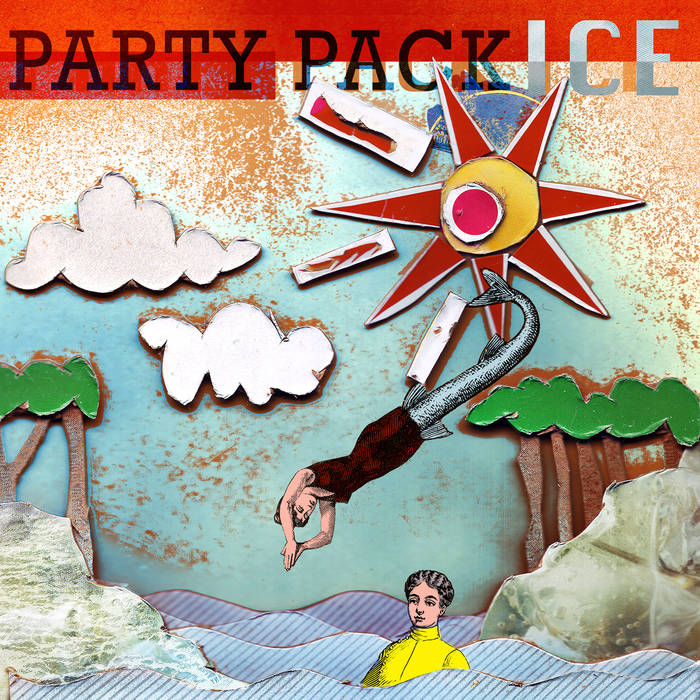
Making New Waves 2009 . Budapest


image

December 10-13. 2009. – Budapest, TrafĂł House of Contemporary Arts

This year the Making New Waves Festival in conjunction with the “Music in the Global Village Conference” will discuss the relationships between music, networked systems and other genresof art. The international conference researches artistic and technological domains that are made available through the interactions of humans and machines in networked systems, and its implications for the creation, performance and perception of music. The festival will present pieces that explore computer technology and the Internet.

The aspirational and optimistic term “Global Village”, coined by Marshall McLuhan in the 1960’s to describe the rapidly growing telecommunication networks can be used in relation to contemporary computer based internet. Already it is possible to see how the existence of the internet creates new structures and communities. Music is no exception. Composers can choose to work in total isolation or can cross borders of their local environments to connect with thousands of musicians through the network. Different artistic groups can transcend the style-forming influence of their specific geographical identities. Different spaces and different identities, totally incompatible in the past, can be combined together. The result will be part both of the global village and the local community. The intersection of real and virtual space.

The network as a medium reqiures much more effort and activity on the part of the user than traditional forms of communication. The conference and festival aims to echo this fact in allowing space for the participants (speakers, musicians, and audience) to play a more active role in the organisation and performance of the conference and festival in order to collectively form the final outcomes. The Participants will discuss and decide the final topics and schedule of MNWGV on a wiki which will be online 2 weeks before the conference begins. The pieces presented during the festival will explore the notion of near and distant connected spaces and there will be the opportunity for the audience to influence some of the pieces through network technology.

The recent crisis has demonstrated the fragilities and limitations of culture based on arcane financial practice and mass consumption, it suggests that the only way forward is for us to actively influence the decision-making processes that inform our lives. Jacques Attali* argues, that “music moves faster than economics and politics and hence prefigures new social relations”.

The current aspiration of network -based music is to extend the domain of influence and decision-making about music to a wider circle.The organisers of MNWGV hope that Attali’s argument will become true and that new trends presented in the conference will be reflected in other fields of culture and social and ecomomic life.

* (paraphrased in Audio Culture: Readings in Modern Music. Ed. Cox & Warner)

December 10. 2009. (Thursday) Long Distance Dialogues
December 10. 2009. 8:00PM – Laser Avatars >>>
December 10. 2009. 8:40PM – Georgi Sztojanov: Hunger >>>
December 10. 2009. 9:30PM – Frank Gratkowski / David Wessel duet >>>
December 11. 2009. (Friday) Local networks
December 11. 2009. 8:00PM – Kathleen SupovĂ© – Exploding Piano >>>
December 11. 2009. 9:30PM – European Bridges Ensemble >>>
December 12. 2009. (Saturday) Dream of futurists
December 12. 2009. 8:00PM – MERZBOW / Balázs Pándi duet >>>
December 12. 2009. 9:15PM – Zoltán PintĂ©r: …eine kleine sonnen canone… >>>
December 12. 2009. 9:30PM – Post-show discussion with Masami Akita
December 13. 2009. (Sunday), 6:00PM – Workshop Closing Concert >>>

+info

If you enjoyed this post, make sure you subscribe to the RSS feed!

Related posts

fyi: circle_of_fifths @klangbiennale_2, hessischer rundfunk/frankfurt


image

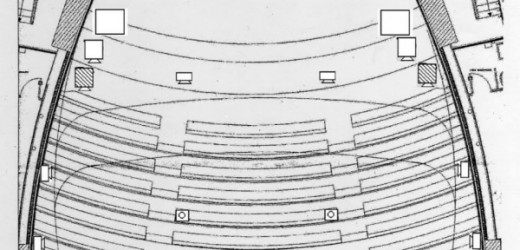
for centurys, western music has been determined by the grid of the circle of fifths, establishing a virtual tonal space of 12 equidistant pitches.

by an offline-process of spectral filtering, these 12 pitches are extracted from recordings of music. the resulting 12-track file contains one pitch per track, but spread over the full orchestral range.

this file is played back through an array of 12 loudspeakers, arranged in the order of the circle of fifths. the virtual space of tonal order is thus projected into the real space of loudspeakers.

depending on the postion of the listener, he hears either the original piece (= equal distance to all speakers) or, to the other extreme, only one pitch (= ear close to only one speaker). between those two extremes lies a world of subtle to gross shifts in the perception of otherwise well known music.

the installation was first shown as part of the “3 HEILIGE GEEST (WEEKEND) (30/9/2006-1/10/2006) at the voorkamer in lier / belgium


<A HREF="circle_of_fifths.mp4">[View QuickTime Movie]</A>

Double click on the image to start/stop video-simulation, based on the menuet from: w.a. mozart jupiter symphony (6,9 mb, quicktime-mp4)

the example demonstrates the process on a recording of the menuet of w. a. mozart “jupiter symphony”. starting with “b” one pitch after the other is gradually faded in,
according to the order of the circle of fifths until at the end, the full orchestra is sounding.

+info

If you enjoyed this post, make sure you subscribe to the RSS feed!

Related posts

KHEOSTATIC


image

Improvisation composĂ©e en trois actes, autour de la magnificence de l’Homme, ses origines et sa perception exponentielle

Joséphine Muller : Ian Linter

(ordinateur x2, sampleur, guitare électrique, guitare acoustique, basse électrique, percurssions, Casio SA-5, K7, radio transistors, objets)

I – Universal Transfusion : 13 Nov 2009

II – Human Khaos : 4 Dec 2009

III – Abyssal Force : 18 Dec 2009

La Societé de Curiosités

If you enjoyed this post, make sure you subscribe to the RSS feed!

Related posts

Futura 2010 Call for works


image

For its 2010 edition, the Futura festival is looking for fixed media works (acousmatic music, musique concrète, video art, hörspiel, etc.) around the ‘travel diary’ thematic.

The sent works may be ‘real’ diaries, elaborated with sound takes and/or recognizable images, but these diaries may also be ‘abstract’, without any identifiable sounds, concentrating only on remaining traces, impressions. The works evolving between these two poles are also, indeed, welcome.

It is all about drawing a large and original view of the ‘travel diary’, which is not only a journey in a geographical space, but rather the expression of an experience or a view on the surrounding world. As such, it is not absolutely necessary to have crossed back and forth the whole planet to submit a proposal, obviously travels are also metaphoric. It can be expressed through very diverse aesthetics and forms.

Nonetheless, we are not looking for ‘raw’, ‘objective’ soundscapes or field-recordings. To the contrary, we would like to program subjective works, and place at the centre of this thematic the perception of the traveller-composer-artist.

The submissions:

- The limited number of submissions is 2 works by composer, excepting works with video which amount is not limited.

- Only sonic works on tape medium should be submitted (acousmatic/concrète, radiophonic art…).
Please do not send proposals for live electronics or performances.

- Preference is given to stereophonic music (multiphonic works may be accepted, but always if a stereo mix is provided for the selection process).

- Works including video are also encouraged.

-Deadline for the reception of works on CD Audio only (no cd-r or DVD-Audio) or DVD (for videos) is fixed before January 31 2010 (post-marked).
At the following address: Futura, 62, avenue de Flandre F-75019 Paris, France.

- Fill necessarily the form you’ll find as an attachment and send it by email: info@festivalfutura.fr

- Also send by email a program note about the submitted work (20 lines max), a short biography and a picture (.tiff or .jpg) to info@festivalfutura.fr

Formulaire Futura 2010 / Form Futura 2010
??
Nom/Last Name:
Prénom/First Name:
Date de naissance/Date of birth:
Nationalité/Nationality :
?Adresse/Address:
Téléphone/Phone number:
Email/Email:
Site Internet/Web site:

Biographie (10 – 20 lignes)/Biography (10 – 20 lines):

Titre de l’oeuvre/Title of work:

Durée/Duration:

?
Studio et année de composition/Studio and year of composition:

Lieu et date de la création /Place and date of the creation:

Notice (10 – 20 lignes)/Program Notes (10-12 Lines):

+ info

If you enjoyed this post, make sure you subscribe to the RSS feed!

Related posts

23’17’’ • exposition sonore


image

Vingt-trois minutes dix-sept (23’17’’) est une exposition conçue comme une partition se déroulant dans le temps avec Dominique Blais, Pascal Broccolichi, Dominique Petitgand et Jérôme Poret.

23_17_fondblanc


Du 4 septembre 2009 Au 25 octobre 2009

Entrée libre du jeudi au dimanche de 14h à 19h.
Vernissage le vendredi 4 septembre Ă  partir de 18h.

Dominique Blais, Pascal Broccolichi, Dominique Petitgand et Jérôme Poret
Commissariat : Isabelle Le Normand assistée d’Annabel Rioux
Un projet réalisé en collaboration avec Kerwin Rolland, ingénieur acousticien
Vingt-trois minutes dix-sept (23’17’’) est une exposition conçue comme une partition se déroulant dans le temps. Dominique Blais, Pascal Broccolichi, Dominique Petitgand et Jérôme Poret partageaient depuis quelques années le désir de réfléchir ensemble aux formes possibles d’une exposition collective d’installations sonores. Leurs propositions explorent les conditions d’une écoute et partageront le même espace. Les œuvres produites à cette occasion témoigneront d’une préoccupation commune aux artistes : la façon dont le son peut transformer notre perception de l’espace et du temps, selon sa nature et sa source physique. Ainsi, chaque oeuvre initiera un rapport spécifique au lieu, que l’on pourra percevoir distinctement grâce à l’enchaînement des pièces sonores, diffusées successivement afin d’échapper à la cacophonie. Invité à déambuler entre les oeuvres pendant l’écoute tout en devant s’adapter au rythme de chaque séquence, le visiteur sera confronté à la question de sa position d’auditeur-spectateur. La présentation conjointe des oeuvres dans l’espace, assortie de leur diffusion non simultanée, sera propice à l’apparition de combinaisons singulières, puisque chaque installation sonore, tout en disposant seule de l’ensemble du lieu, se juxtaposera temporairement aux composantes visuelles des autres.
• Dominique Blais présente une installation issue de son projet pour la résidence Arts aux Pôles à Ny-Alesund (Svalbard, Norvège). Lors de l’été 2008, il fut accueilli sur la base franco-allemande (AWIPEV) de ce village scientifique considéré comme la localité la plus au Nord de la planète, pour y réaliser des enregistrements de fréquences VLF (Very Low Frequencies). Les échantillons récoltés seront diffusés par une constellation d’enceintes sphériques occupant le plafond.
• L’oeuvre de Pascal Broccolichi fait littéralement vibrer Mains d’Œuvres, grâce à un dispositif au sol, permettant d’appréhender l’espace par un jeu d’échos qu’on pourrait rapprocher du procédé d’écholocation utilisé par les chauve-souris.
• Dominique Petitgand propose une installation articulant le coude d’entrée du lieu et son espace principal, grâce à cinq sources sonores émettant des fragments de voix qui, ensemble, feront émerger un récit.
• Jérôme Poret occupe l’un des murs avec un objet hybride, entre écran, tableau et enceinte audio, mis en tension par un crescendo sonore et lumineux. réalisé à partir de « captation sonore » de l’activité de Mains d’Œuvres.
L’exposition a été réalisée en collaboration avec Kerwin Rolland
Kerwin Rolland a travaillé au sein de la Médecine des Armées françaises, comme chercheur en ergonomie des vibrations, puis à PSA (Peugeot Citroën) en tant que responsable technique d’étude de vibration et acoustique d’habitacle automobile. Il se trouve alors à la croisée de pratiques techniques, sensibles, médicales et psycho- logiques, sur des projets traitant aussi bien du mal de mer que des armes sonores. Il est aujourd’hui ingénieur, designer, acousticien, et créateur sonore. Il travaille notamment avec Vanessa Le Mat, chorégraphe issue de la Forsythe Company (How Many Miles, 2006 et 2008), Boris Nordmann , plasticien diplômé du Fresnoy (Couchette #03, 2007), l’atelier d’architecture Archi5 (Fuites de vues, 2007), Nicolas Maigret du laboratoire Locus Sonus (House Mix, 2007), Maya Boquet, Gilles Ruard et Clyde Chabot (Mme Felletin, La nuit je filme les papillons, 2006 et 2008), Bérenger Recoules, spécialiste des sciences cognitives (Résidence Appelboom 2008), Malte Martin (Nuit Blanche, Paris, 2008), Julien Prévieux (Théâtre Clandestin, Anglet, 2009), et Joris Lacoste, Frédéric Danos, Grégory Castera et Emmanuelle Lafon (performance Parlement, 2009). Il assure des activités de conception et conseil technico-artistique auprès du Musée du Quai Blanly, et du centre d’art Khiasma aux Lilas.Expert en vibrations mécaniques solidiennes et en traitement des basses fréquences dans les transports et les environnements publics, il assure des fonctions de conseiller en psycho-acoustique et étude sensible de la perception sonore pour des projets d’urbanisme en cours.
Kerwin Rolland a reçu une formation d’ingénieur à l’Institut National des Sciences Appliquées de Rennes dont il est diplômé en 2000 et a étudié la composition électro-acoustique à l’Ecole Nationale de Musique et Danse d’Evry, à l’IRCAM (Paris), et au STEIM (Amsterdam).
Télécharger le dossier de présentation en cliquant ici


Blais_00001 copy

Dominique Blais
Ny-Alesund (photographies prises lors de sa résidence à Ny-Alesund, en Norvège), 2009

Brocco-Loop copy 1

Pascal Broccolichi
Loop 2007
Dispositif sonore, dimensions 80 x 250 x 250 cm
Anneau et ressort métalliques laqués blanc, système de diffusion équipé de 4 vibreurs basses fréquences, 4 haut-parleurs coaxiaux, lecteur cd, amplificateur, 2 caissons de compression en contreplaqué blanc.
Croquis de projet, technique numérique 3D

dpetitgand_image1 copy

Dominique Petitgand
Quelqu’un est tombé, installation sonore pour 6 haut-parleurs
1993 / 2009, Vue partielle de l’exposition Quelqu’un est tombĂ©, Abbaye de Maubuisson, Saint-Ouen-l’AumĂ´ne,2009. © photo Catherine Brossais – Conseil gĂ©nĂ©ral du Val d’Oise

poret

Jérôme Poret
Skilled labour (maquette), 2009


more info

If you enjoyed this post, make sure you subscribe to the RSS feed!

Related posts