Tag Archives: Aesthetics

David Vélez : 20:51

image


’20:51′ is the first release in a new series here at test tube. David challenged me several months ago in doing some kind of book release, and then I though to myself: ‘why not starting a new mixed-media series of work?’. The idea started to materialize slowly and now we proudly present this new work from David Vélez.
In the future, expect a different kind of mixed-media works: text and audio, video and text, audio and video, audio and photo, etc. We want that artists feel completely free in aesthetics and form. This is their naked canvas here at test tube.» – Pedro Leitão

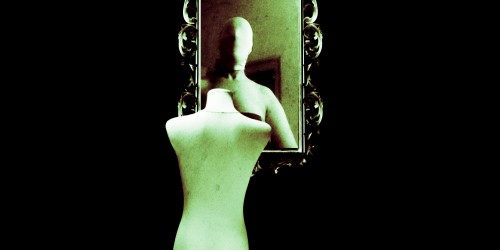
«’20:51′ is a publication composed of 1) a series of photographs I took and put together as a PDF publication, and 2) a sound piece titled ‘Polvo’. This is the first sound work I finish and publish in almost 9 months, a period where I looked around for inspiration and slowed down.
The word ‘Polvo’ in spanish means ‘Dust’ but also refers to the sexual act of reproduction: the origin of this meaning is unclear.

Celebrities like Woddy Allen, God, John Lennon, David Bowie and even Pablo Picasso have used the word ‘Polvo’/'Dust’ on their creations and/or on their quotes and titles.

“…quia pulvis es, et in pulverem reverteris… “.

(“…for dust you are, and to dust shall you return…”).

…is a quote taken from Genesis 3:19 in the Bible. Some intellectuals claim that this Bible quote is the origin of the use of the word ‘Polvo’ to refer to the sexual act.
The cyclic and finite/infinite notion that are found on the use of the word ‘Polvo’ are quite inspiring and probably influenced the way the piece sounds and feels, since the title ‘Polvo’ was assigned to the piece before I composed it.
Dust was here before us, dust will remain here after us. That fact makes everything else simple, ephemeral and harmless.

There is not a manifest connection between the piece and the photos.»
- David Vélez

? Download

download

Downloaded times.

cc
report broken link

If you enjoyed this post, make sure you subscribe to the RSS feed!

POTLATCH : Live at Fábrica

image

There is an English term that is becoming increasingly common when we talk about non-conformist and transgressive music: “leftfield”. The significance is plural, but the meanings converge to the same idea – literally, it means “coming from nothing”, in an abbreviation of the expression “out of left field”, but it is also taken as a play of words between “field” (territory) and “left” (in allusion to the politic left), becoming something like “coming from the left”. The first uses of the word referred to electronic dance music that had an experimental nature, as the one played by the extinct duo Leftfield, but soon the references were amplified to the more abstract and exploratory tendencies of non-erudite electronic music, and then, for all the proposals, even the acoustic and electro-acoustic ones, that don’t stick to gender nor style or that put it into question. More recently, we can find it in cinema, video, theatre and dance styles that are not in keeping with the dominant aesthetics.

The fact is that the word “leftfield” achieves special pertinence when it refers to improvised music. To all purposes, it is created – at least apparently, because we have to reckon on the personal references of each musician (Cage use to say that «improvising is to play what you know») – from the scratch, in other words, in the very moment of its public performance, in addition to the fact that it has left and extreme-left connotations since its origins in the context of the social and cultural movements of the 1960s (with special relevance for the ones with a libertarian stamp). The percussionist Lê Quan Ninh is peremptory regarding this element: «Between the present artistic practices, there is one in which the anarchist principles are evident, the free improvisation.»

If the musical language in which people use to improvise until the middle of last century – jazz music – lived the revolution of creative spontaneity and liberty during the free jazz years of Black Power (without ever disconnecting from the composition structures of the tradition from where it came from), in the old continent they wanted to go further and formulate a new approach labelled as free music. This one was represented by the egalitarian programmes of Scratch Orchestra, Spontaneous Music Ensemble, AMM and Musica Electronica Viva (MEV). About this last ones, Alvin Curran, one of its founders, remembers the following: «At that time, we believed music was not property of an individual or author, but it belonged to the collective, and that music is an universal human right, in the sense that everybody play if they just want to. Curiously, these believes are again in the middle of an ethic and legal debate regarding the definition of what is music, it’s authorship and the use of it by the people over the internet. We use to be characterized by “shocking” (even for us) absence of authority and leadership and we use to apply the principle that everybody could produce sounds in some way, in an act of spontaneous musical creation. This attitude of involving the audience in the concerts – a radical assault to the sacred cows of bourgeois’ culture – mean the suicide of the group as a closed entity, but gave us the possibility to achieve the most dangerous and unstable experimental limits. One of the main objectives was the creation of a tribal energy, with all and every means, challenging death, asserting life, searching ecstasy, in an idiosyncratic mixture, naked and without the mediation of anarchism, communalism and transcendentalism.»

MEV attitude went until where it was possible or impossible and not everything they did with non-musicians seems to us, nowadays, interesting, especially because we listen/observe as outsiders – with a necessarily different perspective. Maybe Elvin Jones was right when he stated that «there is no liberty without any kind of self-control and self-discipline». Remembering his collaborations with John Coltrane: «Even if he gave the impression of liberty, what he played was based on lots reflection and discipline.» Maybe Ron Carter had this liberty, when he pronounced: «we are able to be free as much as we want to, but we need to have a “background” with which we can relate to, putting in practice that same liberty – other way, we are relegated to a corner».

Maybe, it will repeat. The fact is that Potlatch octet in this live record is placed between free jazz and free music. When we guess the legacy of Ornette Coleman in the sonority and in the non-hierarchization of instrumental roles, it comes out, without warning, situations of total and abstract deconstructionism, with electrical (Guilherme Leal’s guitar) and electronic (Nuno Lima’s devices) interferences; a great high density percussion base, now and then turned to beat or to texture’s developments (Luís Desirat’s drums and Monsieur Trinité’s objects); and a solid, even when discreet and on duty to the group, harmonic elaboration, granted permanently by the piano (Filipe de Sousa) and very often by the double-bass (Pedro Roxo) which is not limited exclusively to rhythmic accompaniment. Two different approaches to improvisation are, then, constantly intertwined, one associated to the afro-American legacy, and the other to a less codified European stamp. On the “scene’s mouth” we can find the saxophones (Jorge Lampreia on sax soprano, here and there also playing the flute, and José Lencastre on sax alto), major responsible for the connotations with what most listeners perceives as “jazz”. The constant in and out of different formats and the scratch in the cracks between two contiguous worlds is what delights on this project, which plays with alignments and ruptures, reviving through it self-questioning attitude the “leftfield” premises.

In his essay “Improvised Music After 1950: Afrological and Eurological Perspectives”, professor and trombonist George Lewis refers how jazz is to free improvisation what he designates as the “epistemological other”, adopting the terminology of social scientists Margaret Somer’s and Gloria Gibson’s. Using the understanding of this essential AACM figure, Potlatch’s jazz will emerge as a reference pillar of a contraposition work. To be more specific, Lewis points out that jazz «served to animate many projects in the formation and exploration of a particularly Eurological improvisative sensibility», even when the music distances itself from that idiom. It is precisely the case of this group placed on the left of the musical left that was the “new thing”, which in these days does not mean to take up arms and blow up bombs.

Rui Eduardo Paes (Music critic, essayist, editor of the magazine Jazz.pt)
English translation by Sandra Pires

? Download

download

Downloaded times.

cc
report broken link

If you enjoyed this post, make sure you subscribe to the RSS feed!

Eddie Prévost : Entelechy


Eddie Prévost : Entelechy


Eddie Prvost

Entelechy

label: Matchless Recordings

ref: MRCD67

year: 2006

players: Eddie Prvost : tam-tam

Stating the reality of sound per se, detached from the intention of performer and composer, these pieces based on the possibilities of a gong exposed to a wide range of fricative and percussive techniques hint at the music?s Brechtian aesthetics roots.

Afirmando la realidad del sonido en si, desapegado de la intencin del ejecutante y compositor, estas piezas basadas en las posibilidades de un gong sujeto a diversas tcnicas fricativas y percusivas contienen un guio a las raices estticas Brechtianas de la msica.

m-1412

If you enjoyed this post, make sure you subscribe to the RSS feed!

Subirana/Saura : Araki


Subirana/Saura : Araki


Subirana/Saura

Araki

label: G3G Records

ref: G3JSAS1

year: 2005

players: Anna Subirana: Voice, Joan Saura: Sampler

Sampler and voice duo where the various influences and genres coexist giving way to a world halfway between contemporary electroacoustic and improvised forms where the inversion of the principle ?technique of appropriating? often serves the aesthetics.

Do de sampler y voz donde las diversas influencias y gneros coexisten dando lugar a un mundo a medio camino entre las formas de la electroacstica contempornea y la improvisacin donde la inversin del principio ?tcnica de la apropiacin? a menudo est al servicio de la esttica.

m-1396

If you enjoyed this post, make sure you subscribe to the RSS feed!

Actis Band : Allende


Actis Band : Allende


Actis Band

Allende

label: Leo Records

ref: CD LR 462

year: 2006

players: Carlo Actis Dato, Massimo Rossi, Karsten Lipp, Federico Marchesano, Dario Bruna

Embeded in a hardcore/funk aesthetics, Actis band take their folk roots on a journey looking for harsher, rock influenced sonorities, sprinkled with bright solos, distorted guitars, wah-wah funk grooves, full-blooded basses and harsh winds in the lead (guitar) role.

Inmersos en una esttica hardcore/funk, la Actis band lleva sus raices folklricas de viaje en busca de sonoridades ms duras, rockeras, salpicadas de brillantes solos, guitarras distorsionadas, ritmos funk-cum-wah-wah, contundentes bajos y desgarrados vientos en el papel de (guitarra) solista.

m-1366

If you enjoyed this post, make sure you subscribe to the RSS feed!

Matt Steckler : Persiflage


Matt Steckler : Persiflage


Matt Steckler

Persiflage

label: Innova

ref: Innova 644

year: 2005

players: Matt Steckler, Curtis Fowlkes, Michael Cain, Lonnie Plaxico, Pheeroan Aklaff

Original compositions featuring a wide range of jazz styles, -modern, blues, latin, free-, which illustrates the musicians? ease at playing in so varied a context as well as a certain tendency towards multistylistic collage aesthetics.

Composiciones originales que incluyen una amplia paleta de estilos jazzsticos ?moderno, blues, latin, free-, que ilustran la comodidad de los msicos en un contexto tan diverso as como una cierta tendencia a la esttica de colage multiestilstico.

m-1362

If you enjoyed this post, make sure you subscribe to the RSS feed!

Antonio Murga : Teratologa


Antonio Murga : Teratologa


Antonio Murga

Teratologa

label:autoproducido

ref: autoproducido

year:2006

players: Antonio Murga

Experimental techno of decidedly simple aesthetics both in its inspiration and modular sources. One-man-band hyper-production (99 tracks) of accustomed outcome.

Techno experimental de evidente sencillez esttica tanto en su inspiracin como en las fuentes (modulares). Hiperproduccin de hombre orquesta (99 cortes) de habitual resultado.

m-1358

If you enjoyed this post, make sure you subscribe to the RSS feed!

D’incise – Insectes, Attente et Pixels

image


Among the artists who combine the aesthetics and sound sculpting of avant-garde with the posse and power of bass-driven urban music D’incise is clearly one of the most interesting and solids of them all and his latest release on Zymogen is only an example of that.
“Insectes, Attente et Pixels” got to be one of the best produced albums I have heard in a while, every sound seems carefully constructed and the way the percussive structures are built, leaves the listener absolutely dazzled and delighted.
The first track “Elle Dort” is a mellow and epic opener, with a laid back mood to it that clashes with an intricate progression of broken percussions that maintain a level of tension through the entire track.
This album have some hyper, convoluted and frantic peaks on “Contemplatif et pixellisé” and “On peut pas tout cacher avec le printemps”: both ecstasies of broken sounds and blazing self-constraining shapes, that grow into enormous bursts of chaotic energy.
Something that I truly love abut D’incise, is that he has some kind of a hardcore attitude, very strong willed and filled with anger and rage that is very present on “Spectacle” whose heavy rhythm evokes the power and will of a military march. Even though I don’t speak French and don’t understand what the vocal sample from the beginning says, it’s not hard to understand that they are upset about something that has to do with the unfair and miss proportioned economical situation the world lives today. This very powerful and dark record finds a balance with slower and awkwardly built tracks such as “Anticipation D’un Voyage”(probably my favorite tracks of the whole record), “Traumatisme Enfantin” and finally “Insectes diurnes et nocturnes”. On those pieces D’incise experiment with unsetting speeds and weird pitching that grow into some really beautiful shapes and motions.
“Insectes, Attente et Pixels” is an exceptional record that a lot of people could clearly enjoy: from the IDM-heads to people more interested in avant garde experimentation.

David Velez

? Download

cc
report broken link

If you enjoyed this post, make sure you subscribe to the RSS feed!

Grabowski, the Beautiful Schizophonic, Rippie, Raposo : Prod


Grabowski, the Beautiful Schizophonic, Rippie, Raposo : Prod


Grabowski, the Beautiful Schizophonic, Rippie, Raposo

Product

label: Cronica Electronica

ref: Cronica 023-2005

year:2005

players: Pawel Grabowski, The Beautiful Schizophonic, James Eck Rippie, Paulo Raposo

Electronic ladscapes in the tradition of contermporary music. Close relation between technical resources and aesthetics. A single form continues to spin again and again, proposing variations within permanent boundaries.

Paisajes electrnicos afines a la contempornea. Relacin cercana entre los recursos tcnicos y la esttica. Un forma nica sigue girando una y otra vez, proponiendo variaciones dentro de fronteras constantes.

m-1353

If you enjoyed this post, make sure you subscribe to the RSS feed!

Franois Carrier : Happening


Franois Carrier : Happening


Franois Carrier

Happening

label: Leo Records

ref: CD LR 451/452

year:2005

players: Franois Carrier, Mat Maneri, Uwe Neumann, Pierre Ct, Michel Lambert

Rather than radical aesthetic gestures, filling of gaps, expanding intervals with microtones, contrasting perpectives and backgrounds, blending aesthetics, experimenting with juxtapositions seen from a jazz trio core.

Ms que gestos estticos radicales, rellenado de huecos, expansin intervlica por microtonos, contraste de perspectivas y trasfondos, mezcla de estticas, experimentos con la juxtaposicin vista desde un ncleo de tro de jazz.

m-1340

If you enjoyed this post, make sure you subscribe to the RSS feed!

Minton/Turner : Ammo


Minton/Turner : Ammo


Minton/Turner

Ammo

label: Golden Years

ref: GY 22

year:1984/2006

players: Phil Minton, Roger Turner

Free improvisation duo. Search of possibilities around instrumental peripheries, leafing through ideas, exploiting the recent, engaging in conversations or in parallel independent monologues, this recording belongs to an expanding period both of the musicians? experience and of the aesthetics of impermanence.

Duo de improvisacin libre. Bsqueda en las periferias instrumentales, ojeado de ideas, utilizacin de lo reciente en conversaciones o monlogos independientes … Esta grabacin pertenece a un periodo de expansin tanto en cuanto a la experiencia de los msicos como a la esttica de la impermanencia.

m-1337

If you enjoyed this post, make sure you subscribe to the RSS feed!

Massacre : Killing Time


Massacre : Killing Time


Massacre

Killing Time

label: Fred Records

ref: FRO/ReR 10

year:1981/2005

players: Fred Frith, Bill Laswell, Fred Maher

A trio exploration of the outter possibilities of experimental, extended technique noise set within asymmetric rhythmic constructions and unison ostinati responding to an overt hardcore aesthetics. The emphasis on multistylism contributes an enhanced variety which causes the actual trio line-up to feel like a much larger ensemble.

Exploracin en tro de las posibilidades de la perfieria del ruido experimental, de tcnica ampliada, buscando entre construcciones rtmicas asimtricas y ostinatos en unsono que responden a una esttica hardcore sin tapujos. El nfasis en el multiestilismo aporta un enriquecimiento por medio de la variedad , lo que contribuye a que la sonoridad del tro parezca ms bien el resultado de un grupo mucho ms numeroso.

m-1332

If you enjoyed this post, make sure you subscribe to the RSS feed!

Hide this content.