.RR . RReplay
suRRism-Phonoethics is proud to place the second .RR squirt to our shelves…
→ Download
Downloaded times.
If you enjoyed this post, make sure you subscribe to the RSS feed!
UTF-8" />
suRRism-Phonoethics is proud to place the second .RR squirt to our shelves…
→ Download
Downloaded times.
If you enjoyed this post, make sure you subscribe to the RSS feed!
This disc will play in stereo on a CD player and with film and 5.1 surround sound (or stereo) on a DVD player or computer. The music, as always, is prodigious, sounding like a small band, but played by one person in real time (as the film attests). In this format, you can also see the instrument close-to – a highly rebuilt and extended giant Sardinian guitar – with many sympathetic and extra strings, motor driven hurdy gurdy wheels, whirling strings, springs and other appendages, played, like a cello, vertically, with bow, fingers, plectra and machines. However Heath Robinson it may appear, however, it is clearly, under Paolo’s hands, a highly serious and extraordinarily flexible beast – that requires and has given rise to new playing techniques. The programme of compositions here navigates through highly organised additive rhythms, freer Frith-like pointillism and some seemingly impossible mini-orchestrations. The film, professionally made, follows the performance, occasionally interpolating abstract passages and processed images. A remarkable player with a unique instrument, playing a music entirely his own.
Tibi (Trailer) from ANGELI PRODUCTIONS on Vimeo.
2234
If you enjoyed this post, make sure you subscribe to the RSS feed!
wavund. the sound of playful conversation. nonsense. random sounds appearing and disappearing. reappearing. noise accumulations and drones. an improvised minimal onslaught!
keys, sounds, edition and artwork by estanis comella
radio & sounds by miguel a. garcía
→ Download
Downloaded times.
If you enjoyed this post, make sure you subscribe to the RSS feed!
Once every two weeks Jan Kees Helms works as a nurse in a psychiatric hospital during the night while most of the people are sleeping. It is quiet but there is no complete silence: Every night he hears the same sounds from the heating, a chair, the door, walking at the stairs and an old computer. He recorded these sounds during one night. The next night he mixed them as two layers without any additional processing, to keep the sound of the building as original as possible. The meaning was to make a pure composition with only the sounds of the night during that short period of two nights.
→ Download
Downloaded times.
If you enjoyed this post, make sure you subscribe to the RSS feed!
Subtle fluttering fragments that boarder on the inaudible float across the stereo spectrum and hover on the fringes of perception are interspersed with glitchy shards that dance on the edge of the speaker cone and threaten to pierce through into the room The newest collection of works by Seattle sound artist Steve Barsotti featuring works for invented instruments, electronics and field recordings. Limited edition of 200
“Terraces is built out of steppes, plateaus and crevices I would never have dared on my own. Mundane sounds become monumental events, subtleties are substantiated, echoes made epic, and shades of doubt edited out. Composed out of an improvised set, Terraces articulates thresholds where land meets sky, sea meets shore, and where one’s inner landscape converges with the outside world.” – Perri Lynch
If you enjoyed this post, make sure you subscribe to the RSS feed!
Audio Work “c om prayer” demonstrates the difference between the levels of human perception, the difference between the spiritual, sverhsmyslovym and algorithmic artificial. The purpose of the album-convention to show such differences. The genre this album should be seen as a continuation of psychoacoustic experiments that started in the second half of xx century, connected with the names of representatives frantsuzskoyspektralnoy schools, Xenakis, Keydzha.Za basis of work taken compositional principle of transformation of a visual object in the sound (timbre-altitude combination) with the help of computer algorithms. visual objects “c om prayer” began seven Orthodox icons, “sound” which created the basis for the seven improvised songs with brief epigrofami author-”edinnstvenno true humanity.” genre; conceptual ,8-bit, experimental.
→ Download
Images
1
2
3
4
5
6
7
Cover Front
Cover back
Inside
Downloaded times.
If you enjoyed this post, make sure you subscribe to the RSS feed!
“Magie électrisante de boucles lunatiques Voyage au centre 2009. Grains de sons lançés dans le vide d’un songe sidéral hors commerce. Voix fantomatiques revisitant l’autre vision de nos silences. Bien au delà de nos paresseuses espérances”
Miss Point
Recorded/mixed by William Jame & Félix Levacher at l’INFA. Made in France, February 2009.
°Feat: Thomas Petit (guitar), Nicolas Laferrerie (voice)
JOHNCO029 [LP]
Artwork Théo Mercier.
→ Download
Downloaded times.
If you enjoyed this post, make sure you subscribe to the RSS feed!
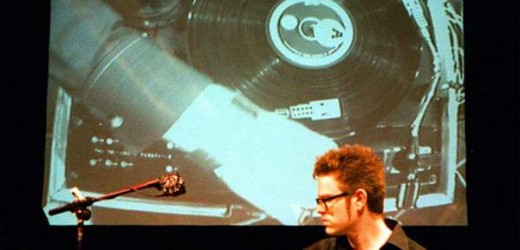
A live performance at Electronic Organica V (Britons Protection, Manchester) using turntables, modified records, objects and electronics in May 2010.
Graham Dunning is a sound and visual artist based in the UK. His sound sources include field recordings pressed to dubplates; modified records; adapted playback equipment such as reel-to-reel tape players, turntables and Walkmans; found sounds, especially discarded footage of people’s home recordings; home made electronics and circuit bends; broken cymbals and other metal objects; and inexpensive delay units.
Dunning has recently performed at temporary gallery space Outlet run by Exocet in Manchester, a Happening in Shoreditch Library and the Leytonstone Arts Trail. He also performs in improvised noise, drone and post-punk band Blood Moon; psychedelic drone and improv band Infinite Birth; and produces dubstep, techno and electronica under the name Analogg.
http://www.myspace.com/grahamdunning
→ Download
Downloaded times.
If you enjoyed this post, make sure you subscribe to the RSS feed!
Just over one hour and five minutes, Harley Gaber’s “I Saw My Mother Ascending Mount Fuji” (2009, for Tape and processed Violin and Alto Flute) offers proof of music’s power to transport (the listener) in ways generally associated with film and literature. “Fuji’s” Kaidan-like atmosphere—the Japanese world of ghosts and spirits—unfolds slowly in its process of uncovering and revealing a deeper and different spirit world in what might be termed a spiritual journey: The ascension and transformation of the human spirit into pure energy expressed in the form of both musical and non-musical sounds.
Throughout the 1960s and 1970s Gaber found his own unique compositional language that combined the intensity and extra-musical framing of certain post war, European Modernism with sparser, more obviously spiritual evocations of Eastern aesthetics as made manifest in such diverse expressions as Haiku poetry, Sumi-e painting, and even martial arts forms.
In 1978 he moved from New York City to La Jolla, Ca and stopped making music. Following a two-year hiatus from the arts, he commenced on what was to become a twenty year period of creating an immense body of work in the plastic arts and photography. Much of the work done during that period was informed by his musical instincts and focused, as did much of his later music, on the unity and interrelatedness of things. His predilection for collage work in general reflects and confirms that focus. The years of making art culminated with his largest artistic and personal undertaking in the construction of DIE PLAGE, a photo-collage work of some 5,500 (20 x16 in.) canvases detailing German history in the first half of the 20th Century.
With the completion of DIE PLAGE in the early part of 2002, Gaber turned to writing about the project and to film making, first using images from DIE PLAGE for his films and eventually moving on to other subjects. His return to music began with the creation of soundtracks for all his films. Initially, the soundtracks were (again) in a collaged form using, for the most part, music of others, but also incorporating his own music from old recordings and taped performances. His real return to music composition came in 2008 with his original soundtrack for “Mein Kamps: Akt V” (filmed in Berlin and named after the Berlin bakery chain Kamps). That original soundtrack (existing apart from the film as a strictly musical composition is titled “Berliner Strassen Gesang”) demonstrates a richer, more complex approach to crafting and shaping sound made possible by the use of the computer in composing the work along with the twenty years of rethinking his artistic outlook in general, and his musical thinking in particular.
And now, with “I Saw My Mother Ascending Mount Fuji,” Gaber has returned to music composition. This new work is at once a processing of untimely deaths in his family and a reconsideration of earlier compositions—“Michi” for solo violin (1972) and “Chimyaku” for solo alto flute—which, in their processed and altered form and in conjunction with an entirely new tape part, project a new level of insight into the essential spiritual nature of sound and its physicality; “ . . .both transcendentally abstract and distinctly human,” as the composer puts it. The ascension of Mount Fuji is a meditative journey, a spiritual odyssey perhaps, as real as it is imagined or metaphoric. The composer, however, leaves those distinctions for each listener to decide for him or herself.
Harley Gaber studied with Kenneth Gaburo and Darius Milhaud among others, and is currently living in the S.F Bay Area.
[/rssless]
2232
If you enjoyed this post, make sure you subscribe to the RSS feed!
nowhere, strange and beautiful, warm electronics, nothing”
Produced by Ayankoko!!!
Made in france, Février 2008.
JOHNCO013 [LP]
Photo: William Jame.
http://www.myspace.com/ayankoko
http://www.ayankoko.org
→ Download
Downloaded times.
If you enjoyed this post, make sure you subscribe to the RSS feed!
Rafal Mazur’s involvement with music began in his youth with violoncello studies in Krakow. He switched to bass guitar in the late 1980′s. Since 2000 he has played an acoustic bass guitar built to his own specifications by luthier Jerzy Wysocki. He has developed an advanced and individual approach to his instrument, and to improvisation in general, in which sonority, extended technique and gesture combine effortlessly in performance. He has taken an important role in Kraków to support young artists and improvised music. A founder of the ImproArt studio of improvisation, he has performed jazz and improvised music in clubs and festivals across Poland and Europe, and in China, South Korea and Israel. In recent years he has collaborated with Lisa Ullen, Frederic Blondy, Charlotta Hug, Raymond Strid, Keir Neuringer, Zsolt Sores and Attila Dóra and others. His current focus is the trio Ensemble 56. He is an organizer of the Laboratory of Intuition, a series of spontaneous art presentations in Kraków. Mazur’s main field of interest and activity is collective and solo free/spontaneous improvisation. In his practice as an improvising musician and on his way to mastery/artistry he studys Chinese philosophy (Jagiellonian University). He regards Taoism as a strong base for the enrichment of the improviser’s attitude, and to this end he practices the Taoist’s martial art TaiJi Quan Chen. For Mazur, following the masters of Chinese philosophy and martial arts is crucial in the development of a state of mind prepared for the unexpected situations an improviser encounters in the act of collective free improvisation.
Keir Neuringer has cultivated a personal and intensely physical approach to solo saxophone improvisation that honors, builds upon, and eschews diverse music-making traditions. Vehemently critical of the destructive behavior of industrial civilization, in his work (as a composer, performer, bandleader, writer, interdisciplinary artist and curator) he seeks to bring audiences into a state of emotional and intellectual curiosity that meets the conditions for meaningful dialogue with and transformation of the culture at large. He has collaborated with Rafal Mazur since 1999 and works with a wide and undefined network of inspiring musicians, including turntablist DJ Sniff and the contemporary music group Ensemble Klang.
Keir Neuringer: alto saxophone
Rafal Mazur: acoustic bass guitar
→ Download
Downloaded times.
If you enjoyed this post, make sure you subscribe to the RSS feed!
Román ramón aggnès, po poy y helmut picadillo unen sus saberes quehaceres en un primer disco descargable y escuchable bien para excursión tropical, para recoger espárragos o para plegar cartones.
Les deseamos lo disfruten y sobre todo muchísima suerte en los sorteos.
→ Download
Downloaded times.
If you enjoyed this post, make sure you subscribe to the RSS feed!
Hatori Yumi (22/11/1984) plays form, blip, click and granular noises. The Yumiâs sounds are influenced by Alva Noto and all Raster-Notonâs artists and by Ryuichi Sakamotoâs piano compositions.
He did an EP, âMutedâ, with NakedNoisesNetlabel and partecipated to âManifestoâ compilation, for the portoghese label, Feedbackloop. In March is out a new EP, Parallel, for Haze-Netlabel. Now, heâs working on new project called âRhegmaâ where the music and the videos show the discontinuity of his sounds.
About “Spin”
This is my third EP [ release EPs is an artistic choice ] characterized by microcompositions based on granular synthesis [Side A] and on the inversion of the same songs but in noise-version[B side]. So I suggest you to listen it in tidy sequence.
Info&Contacts
hatoriyumi.altervista.org
www.myspace.com/hatoriyumi
vimeo.com/hatoriyumi
www.discogs.com/artist/Hatori+Yumi
→ Download
Downloaded times.
If you enjoyed this post, make sure you subscribe to the RSS feed!
I spent the better part of the last two decades of my musical life in a rather Sisyphean struggle, practicing and only occasionally performing my own improvisatory sound creations, for the saxophone alone. I worked on an extended (non-circular) breathing technique, an original fingering method that generated polyphonic musical passages on what is usually a monophonic instrument, and a nearly unprecedented rapidity of note making without the usual loss of articulation, individual note clarity, and sonic purity.
As part of this process, I discovered, as many wind instrumentalists no doubt have before me, that specific postures and breathing disciplines were technically connected with teachings that lead towards the achievement of a focused mind, or meditation.
I found that with the hyper speed I was attempting, as I coaxed one musical line to split into multiples, if I focused clearly and mentally traced the several lines, I could occasionally achieve a form of concentration resulting in a peaceful, elevated feeling. A fair analogy might be the optical illusion of watching a fast spinning wheel seem to slow and then move in the opposite direction.
This was all well and good, but the resulting ‘sound art’ often felt incomplete; it was beyond my grasp to consistently achieve or translate what I was attempting with a single monophonic instrument.
In this current innova 3-CD set I have explored my increasing fascination with the craft of multi-track studio recording techniques to more fully convey (compositionally) on multiple instruments what I previously attempted (improvisationally) solo. The studio has allowed me to more clearly delineate those individual voices and develop a more cohesive yet still fractal polyphony. I hope the essence of the art (musical and spiritual) is not dispersed by studio technology (I am not sure about this…it well might be).
The genesis of the first CD “The Soprano Saxophone Choir” came years ago as an exercise to improve my tone. I found that by creating (in studio) an accompaniment of various layered tones and phrases, in different registers and with different timbres, I could awaken hidden qualities in my sound. Vibrations are powerful, and we sometimes forget that there are actual physical changes taking place in the instrument which have corresponding aesthetic effects on the practitioner and hopefully the listener as well. There seems to be a special, even mystical quality when an instrument or voice is multiplied by itself…a choir. This first CD is an exploration of that choir phenomenon: many soprano saxophones living together, magnifying the ‘overtonal’, textural, harmonic, vibratory, ‘soundistic’ experience.
CD two, “The Saduk” – What do nearly all instrumental virtuoso do? Running headlong into limitations, they make significant changes to their instruments or in some cases make a new one entirely. I love the saxophone deeply, but it has some inherent constraints. It is a ‘heavy’ instrument, laden down with many large keys; you need a lot of breath to vibrate its elongated conical metal tube.
Often longing for a more tender palette of expression than the saxophone would allow, – I developed flute envy.
My solution was to create the saduk, the simple open-holed flute/reed hybrid featured on these tracks. Inspired in equal measure by an inner sound – one that I have ‘felt’ as much as ‘heard’ throughout my life – and the primal, tender wind instruments found in most world traditions, this recording marries a prenatally familiar wind expression with voice, percussion, saxophone and other acoustic sounds.
For the third CD, “The Abandoned Orchestra”, I did not throw in everything but the kitchen sink; I did, however, use enough plumbing materials – making new wind instruments – to fix that sink quite a few times over. Along with the saxophone and saduk I created the sadukini (a conically functioning saduk, similar to ‘world oboes’ like the nadaswaram, shenai, or zurna), the tridoulaphone (another flute/reed hybrid heard here in soprano, alto, and tenor registers), and a reeded slide trumpet.
“The Abandoned Orchestra” continues with my solitary, unassisted practice of composing, performing and recording. I have been contemplating the two senses of abandonment: to be abandoned is to be either forsaken or unrestrained – but isolation and desertion may lead to autonomy and liberty. In this self-layered orchestra, I have explored my own diverse pre- and post-ethnic sound world…
-Alexander Berne, 2010
If you enjoyed this post, make sure you subscribe to the RSS feed!
Recorded at Kakutopia, York, in March 2010. This album recounts, in choppy strains, the truth and speculation surrounding how Falco are doggedly followed by the narcotics trade, through no solicitation of their own. The cover features masks made specially for the duo by Jill Lorinson – Falco always wear these to play. Two further masks, originally made for Rhodri Davies and Adam Parkinson, are available for guests to don in solidarity when collaborating: most recent among such performers include David Stackenäs, THF Drenching and Bernhard Garnicnig.
Val Persona – violin
Gwilly Edmondez – mash (tape/vinyl/samples)
Contact:
http://freemusicarchive.org/music/Falco_Subbuteo/
http://www.myspace.com/falcosubbuteoduo
gustavthomas@gmail.com
→ Download
Downloaded times.
If you enjoyed this post, make sure you subscribe to the RSS feed!
“Five facts about this recording:
1. Initially a sax-tuba-piano gig was planned. In truly improvised fashion, the group was extended to a quartet at the last moment, as Roger Turner happened to be in town and agreed to join. Helen Bledsoe sat in for the second set.
2. The recording captures the first live appearance of Alexey Lapin outside of his home country, Russia.
3. The continuity of the music (sequence of the pieces) has been preserved on the recording, and in general very little has been cut.
4. All the pieces have been freely improvised except (2) which is an improvisation based on a composed melody.
5. No animals have been harmed.
2230
If you enjoyed this post, make sure you subscribe to the RSS feed!
A mixture of previously unreleased tracks meant for compilations (that, for reasons left unwritten, never materialized), remixed detrius from 2002-2004, and new material created in 2010. This is an album best enjoyed through headphones.
“Antithesis” is eleven tracks of highly experimental avant-garde power-electronics and noise. Nevertheless, although there is an emphasis on crazed improvisational distortion, analog mutations, and industrial atmospherics which furtively border into dark ambient territory, there are many emotive elements of the album which transcend the usual ‘faceless’ noise performances or blatantly offensive ‘scare tactic freak shows’ of PE acts which focus more upon the ideological message presented rather than the actual noise or electronics themselves.
This is the main focus of Nihil Obstat: auditory experimentation, creating an easily identifiable aesthetic while at the same time evolving into unexpected directions.
→ Download
Downloaded times.
If you enjoyed this post, make sure you subscribe to the RSS feed!
Improvised exchanges and composed moments are captured and placed in orbit. Through a psychoaural lens serendipitous connections are discovered. Mutations are then chiseled into layered, recombinant sonic tapestries where procedural chalk marks between composition and improvisation become blurred. The results remain, encoded with stories of multi-layered ambient expressions.
The trumpet, here, is as much a vocal instrument as a creator of texture, harmony, melody and rhythm, accessing world traditions as a pragmatic signaling device, conjurer of spirits, or hyper-technical expressions of the sublime, freely exploring new realms of gesture, line, and timbre. It is perfectly at home amongst the washes of electric guitar haze, or the micro-examination of small sounds.
Psychoangelo is: Glen Whitehead (trumpets, computer, effects processing) and Michael Theodore (computer, guitar, percussion)
If you enjoyed this post, make sure you subscribe to the RSS feed!
All tracks by Charles Eric Charrier.
Recorded live by Rishi Covaleski and Charles Eric Charrier.
1, 3, 4 mastered by Mathias Delplanque.
2 : Covaleski play percusions and electronics.
Produced and played by Charles Eric Charrier.
Charles Eric Charrier:
→ Download
Downloaded times.
If you enjoyed this post, make sure you subscribe to the RSS feed!
After his “Nordic Recordings“ and “Southern Recordings“ Edu Comelles aka Mensa returns to Resting Bell with a new two-track-EP. Besides his work as composer and sound designer Edu also runs the fantastic Audiotalaia-netlabel.
Both tracks on “Braid Heritage“ are alternate (extended) versions of compositions originally
released on the album “Moorland“ via Test Tube. The work is strongly related to Edu’s recent sound project “Walking Composition“, a great concept between technology and nature. The general sound is shifting between deep droning elements and more rhythmical glitches and bleeps, layered on top of each other and beautifully woven together.
All recordings done in Edinburgh’s Heritage of Braid between June and August 2009. This album is a live recording using Walking Compositions Material. Edited and mastered in Valencia, Spain.
Special thanks to: Martin Parker, Andrew Spitz and Chris Bathgate who encouraged me to stay on the forest.
More information about “Walking Composition“: www.educomelles.com/wc/wchome.html
Release Date
21.06.2010
→ Download
Downloaded times.
If you enjoyed this post, make sure you subscribe to the RSS feed!
Playing a tribute to A. Briggs and B. Dobson
Produced by Anton Mobin, Colin Johnco.
Made in France, 18 October 2009.
Recorded live in Paris on radio kkwne.
JOHNCO043 [LP]
Artwork: Théo Mercier.
http://audioblog.arteradio.com/anton_mobin
http://www.myspace.com/colinjohnco
→ Download
Downloaded times.
If you enjoyed this post, make sure you subscribe to the RSS feed!
ITA
D.B.P.I.T. & XXENA – Zur Farbenlehre
Gatti rossi che cadono e’ un etichetta indipendente che promuove musica “non convenzionale”.
La percezione del colore, così come quella dei suoni, è il risultato della combinazione di più elementi basilari elaborata dal cervello umano.
Goethe sosteneva la natura poetica ed estetica del colore contrapponendola alla rigidità scientifica; a questo ci siamo ispirati per questo nostro nuovo lavoro i cui brani prendono il nome di alcuni possibili combinazioni cromatiche.
Artwork by: XXENA
BUON DIVERTIMENTO
ENG
D.B.P.I.T. & XXENA – Zur Farbenlehre
Gatti rossi che cadono is a small indie label that promotes “unconventional” music.
Perception of colour as well as of sound is the sum of a number of simpler elements,elaborated by the human brain.
Goethe advocated poetic and aesthetic nature of colour against the dull scientific theories; we were inspired by his work for the subject of this album, whose tracks are named after some html colour-codes.
ENJOY
→ Download
Downloaded times.
If you enjoyed this post, make sure you subscribe to the RSS feed!
The Ensemble was born in 2007 from an idea of Ricardo Tejero of working free improvisation whithin a compositive context, following the influence established by some works of composers and improvisers like Richard Barret, John Butcher, John Zorn, Barry Guy or Anthony Braxton.
This way the group plunge into improvisations which happen within pre-arranged structures, through previously agreed musical paths or even together with composed music, but at the same time trying to maintain the essential principal of giving the musicians the least possible number of restrictions.
In february 2009, the Ensemble Progresivo presented this performance at Hurta Cordel, in the 13th Edition of the International Festival of Free Improvisation in Madrid.
Marcio Mattos, Javier Carmona, Ricardo Tejero, Adrian Northover and Alison Blunt. They all are part of LIO (London Improvisers Orchestra) and have also shared other projects originating from the exciting music scene of London, where they all live.
Now we have the pleasure to announce with this excellent release the premiere of Audition Records.
Ensemble Progresivo are:
Ricardo Tejero: Saxes, Clarinet & Compositions.
Alison Blunt: Violin.
Adrian Northover: Soprano & Alto Saxophon.
Marcio Mattos: Bass & Electronics.
Javier Carmona: Drums & Percussion.
Recording Enginner: Alvaro Muñoz & Ernesto Santana.
Special Thanks: MusicaLibre, Spanish Association of Improvised Music. Hurta Cordel, International Festival of Free Improvisation. La Casa Encendida, Obra Social Caja Madrid.
→ Download
Downloaded times.
If you enjoyed this post, make sure you subscribe to the RSS feed!
Tratado sonoro a través de una simbiosis entre muros de distorsión arquitectónica y su propios habitantes aleatorios: la fauna urbananita. El disco contiene cinco contraposiciones de segmentos auditivos con silencios extremos y sonidos sedentarios; de hormigón y huesos; de carne, hierro y cristales, de cinturón obrero y arte institucional.
Se presenta un diálogo modulado entre estructuras con resonancias levantiscas y entornos amables de atardecer. La intervención sonora capturada durante un largo mes (febrero de 2010) se fundamenta en una falta total de prejuicios academicistas a través de un núcleo difusor de actividades socioculturales. CCPC es un intento riguroso de estudio de la historia presente de un edificio expansivo y dinamizador; una experimentación sónica que visualiza un nuevo marco de estas instalaciones. CCPC es el viaje migratorio de unas macro cajas de resonancia habitadas y en continua transformación. Bajo los techos sonoros exploratorios se produce un análisis del espacio para uso utilitario en futuros no lejanos. CCPC es la audición no musical del espacio público como caja de resonancia compositiva. Estas cinco piezas representan a un instrumento sonoro que se mide en metros cuadrados.
El papel de los micrófonos de contacto en diferentes lugares del edificio ha sido primordial. La manipulación de los sonidos capturados en el edificio, tanto en el interior como en el exterior ha intentado reflejar en todo momento la idiosincrasia y la representatividad de un foco luminoso de cultura. No obstante, pretendà a partir de la desmitificación del objeto de estudio como ente aislado. Para mí es fundamental el entorno como parte creativa del proceso en relación con el protagonista del experimento; el propio edificio. Que se aisle y se genere estéticamente una pieza compositiva a través de los sonidos de un objeto sonoro (en este caso un edificio) no significa en absoluto que dicho objeto sea un ente separado de su contexto espacial y social. CCPC nace de un proceso dialéctico de captura sonora, en constante diélogo experimental: edificio – sonidos – actividad social – contextualización – subjetivismo – multitud – aislacionismo – encuentro… y los instrumentos para elaborar estos tejidos sonoros provienen de puro material de obra. CCPC es un devenir de flujos ruidistas en plena mutación por proceso de transformación de otros códigos “musicales” que oscila entre el puro ruidismo salvaje y el paisajismo armónico y repetitivo.
Sergio Sánchez.
Grabado en el Centro Cultural Puertas de Castilla
Murcia (2010)
http://myspace.com/jazznoize17
jazznoize@gmail.com
→ Download
Downloaded times.
If you enjoyed this post, make sure you subscribe to the RSS feed!
orchestra eclettica e sincretista is a musical collective led by Marco Lucchi. The concept of this album is group members remixing or constructing pieces from tracks and samples contributed by other members.
“it is about remixing and reworking each other — an “internal” project
…it concerns the pleasure of a collective and shared work
…the title lightly refers to alchemy”
-Marco Lucchi
Features tracks contributed by Steve Layton, Massimo Croce, Loalue, Cometa, Imago Meccano, Giza and Lolek, and sounds by Entia Non, Marco Lucchi, Kozo Ikeno, the Onomatopoeian, Celer, Christian Vasseur, Wara Tito Rios, Sonicbrat, Satoshi Arisaka, Naoki Ishida and Harold Nono
01 Steve Layton – Night Lights (Shintaro Sato)
02 Massimo Croce – Middan Tharir
03 Steve Layton – Canto Notturno (Giacomo Leopardi)
04 Imago Meccano & Marco Lucchi – Glitchy Fragment #1 (curtains remix)
05 Giza – o.e.s. sketch 1 entia non (Steve Layton)
06 Giza – o.e.s. sketch 2 (onomelotron)
07 Imago Meccano – Uncertain (Entia Non Remixed)
08 Giza – o.e.s. sketch 3 – celer 5 4
09 Steve Layton – O Saffo
10 Angelo Secondini – Evaporate
11 loALUe – Along the Serpentine, Under the Snow
12 Lolek – a material, a sound, a shape
Visit www.musichevirtuali.org for more information about Marco Lucchi and o.e.s.
→ Download
Downloaded times.
If you enjoyed this post, make sure you subscribe to the RSS feed!