UTF-8" /> Herbal Records . modisti new releases . modisti Herbal Records

Herbal Records  Herbal Records
Experimental music label founded 2003 by Goh Lee Kwang in Malaysia. The label issued regular compact-discs Concrete Disc, a collection on CDrs - Why Not Ltd (2005-2009), Theme Park (2009-), a collection for live recordings named Live Actions and a free download-only New Directions.
flag
  , Malaysia

Homepage: http://herbalinternational.tk/

Archive by Author

Eric La Casa . W2

image

We think that we « make a journey » but soon enough it’s the journey that makes – and unmakes – us.” (Nicolas Bouvier, “l’usage du monde”)

When I listen today to these pieces, I hear, of course, a geographic inventory of all the places I encountered. Above all, though, and as if by default, I hear the sonic journal of twelve years spent recording sound.

My relation to the sites wasn’t based on a desire to « document » but it is worth noting, however, that a « sound story », more trivial perhaps, has instituted itself, expanding and commenting on my musical journey: that of a man listening.

Moreover, it has never seemed more obvious to me that listening is always situated in what I would qualify as the extreme present, that is, the instant when listening, landscape and time become one.


Bouvier was right : the more we journey, the more the journey transforms us. Fascinated by water and by wind, these agents of transformation, activators of change, became, during those twelve years, my principal, almost exclusive, subjects, wherever I happened to be. Progressively, a methodology, informed by cartography, gave my way of working a certain determinism without, however, breaking my intuitive relationship with the landscape. This also informed my conception of that which is sonic (le sonore), and its importance: being

inside, at the very heart of movement. Listening, without drawing breath, led me beyond my preconceptions – and into the depths also, along with all my recording gear: I remember very well my fall into the cold water of a waterfall’s plunge pool. That was in 1991…

Listening to water or to wind is to bring one’s attention to bear on the perpetual motion of things, a living alchemy, the pulsing of the world.

Eric La Casa, Summer 2010

WATER
1. Les pierres du seuil part 4
2. Les pierres du seuil part 5
An exploration of the wide variety of water territories (from droplets in a cave to powerful ocean waves), in two movements, forming a single composition.
3. Les pierres du seuil part 2
At the emergence of a body of water and air, an effervescence
4. S’ombre part 1
The alchemy of water and stone, summer
5. Spirale 3
The geophony of a river : a meandering journey, marked out by windmills
6. Les oscillations part 2
Waves, oscillations …. an opening up of the landscape
7. L’Inspir du rivage part 2
Ressac… when the sea and the rocks come together

Total running time : 74 minutes

WIND
1. Dans le feuillage du lointain, la clameur d’un bruissement
At the boundary with background noise, an ineffable tumult
2. Les pierres du seuil part 6
Listening to the wind’s journey through the landscape
3. Quelque chose de cela, le désert part 1-2
A distressed wind in a still life landscape
4. Les pierres du seuil part 8
A factory entrance, air expelled by machines
5. L’air au fond rouge
The density of air, a city’s distant rumbling
6. Les aubes sont navrantes
A false northern landscape, cold and hostile… a drama

Total running time : 75 minutes

Credits
Water
1. (1999)
2. (1999) from “Les Pierres du seuil 4-7″ CD . Edition… (USA). September 2000
3. (1998)
4. (1999) excerpts from “The stone of the threshold” CD. Groundfault Recordings (USA). November 1999
5. (2003) Unreleased. Commissioned by The River House [?] at Saint-Georges-de-Montaigu (France)
6. (2004) excerpt from “Les Oscillations part 1&2″ CD. Fringes Recordings (Italia). May 2005
7. (1999) from Explorer series, 7″. Production : Povertech (USA). September 1999

Wind
1. (1998) from “The sound of nature – the nature of sound” compilation. Kaon (France), July 2001
2. (2000) from “Les Pierres du seuil 4-7″ CD . Edition… (USA). September 2000
3. (2000) from “Quelque chose de cela, le désert part 1-3″. Collection Mémoires (France), May 1999
4. (2001) Unreleased. Originally composed for Halana magazine (USA)
5. (2001) from “Sul” compilation, a tribute to Chris Marker. Sirr.records (Portugal), June 2002
6. (2008) excerpt. Unreleased. Originally composed for Clédat & Petitpierre’s performance

Locations [1994 - 2007]
France
Water
Ardèche (steps in the Pissevieille brook / rain on a car / summer rain)
Athee-sur-cher (river Cher in full spate)
Bedoues (river Tarn)
Berry (oozing in a watertank)
Bruxelles, Belgium (machine for rinsing out photographs)
Choisy-le-roy (artificial rain in an industrial zone)
Crotelles (Rain, under an umbrella / brook and brook pipe)
Darnetal (rain on container)
Dieppe (music school organ)
Dunkerque (swelling sea with lighthouse / dunes / sand in wind)
Dunkerque-Sollac (air-cooler / ore in motion)
Epeigné-sous-bois (outflows in trenches and reverberating pipes / water, air bubbles, at the edge of a field)
Grenoble (wall dripping in the 102 venue , during a soundcheck for Cellule Metamkine)
Haute-Savoie (Nant Bruyant brook / violent rain on a car)
Hennequeville (“tubular sea” / heavyflood-tide on a concrete platform)
Le Semnoz (rain falling on a small covered market)
Lozere (Gorges of the river Tarn)
Nouvellière (in a farm, rain after a storm,)
Paris (hail on window / rain and storm in inner courtyard / oozing in a tunnel / outflow in inner pipe / the Ircam anechoic chamber : hand sliding on skin and microphone in mouth ) Paris (in a cemetery, rain, under an umbrella)
Plaisians (foot in dried herbs)
Pordic (distant helicopter / wind in a cornfield )
Port Jehan (waves and peebles)
Vendée (the “Grande Maine” and “Petite Maine” rivers)

Wind
Céré-la-ronde (in a wood)
Choisy-Le-Roi (airplane flying overhead, water cleaning station : electrical waves, water-pump engines / ventilations)
Dieppe (music school : organ)
Dunkerque-Sollac (ore in motion / foundries / hot rolling mills / blast furnaces)
Epeigné-sous-bois (in an oak forest)
Hennequeville (North Sea)
Lussault-sur-loire (fir forest / grinder in the distance / a windy day in a forsaken house / a stormy )
Montlouis (a stormy night / train in the distance)
near Neuil (a forsaken farm)
Paris (Salpetriere chapel and Notre-Dame-des-champs church : organs played by Jean-Luc Guionnet / portable DAT recorder motor / Strasbourg-St-Denis metro station : electrical waves / seeds in motion)
Villeneuve-Saint-Georges (empty goods trains)

and three locations in Europe :
Water
Rovinj, Croatia (lightning / rain and storm in an inner courtyard / rain on an open window frame / along the sea shore)

Wind
Rovinj, Croatia (inner courtyard and wind under door / thirty-story tower, radio waves / strong wind in marina)
Anvers, Belgium (a pedestrian tunnel and elevator)
Dundee, Scotland (in the harbour)

2 x Audio CD
140 minutes+
Release date: November 2010
18 Euros + shipping

click HERE to make your order

Related resources:
Also by Eric La Casa
Eric La Casa / Cédric Peyronnet: La Creuse

Geographically connected
Jean-Luc Guionnet: Non Organic Bias
Eric Cordier: Osorezan

If you enjoyed this post, make sure you subscribe to the RSS feed!

Zbigniew Karkowski / Kelly Churko . Infallibilism

image

All Tracks recorded live
Track 1 Recorded August 12, 2008 at Super Deluxe, Nishi Azabu by Cal Lyall.
Track 2 Recorded May 3, 2008 at Soup, Ochiai by Taro Noguchi.
Track 3 Recorded September 28, 2008 at Soup, Ochiai by Taro Noguchi.
Track 4 Recorded February 8, 2009 at Roots, Keonji by in-house sound engineer .


Edited at Higashi-Nakano, Tokyo.
Mastered at C Squared, Los Angeles, California.

Thanks to www.kenaxis.com for software.

Artwork & design by Yoko.

Audio CD, 6 panels digipak
30 minutes+
Release date: Sept 2010
12 Euros + shipping

click HERE to make your order

2251

If you enjoyed this post, make sure you subscribe to the RSS feed!

Lasse-Marc Riek . Harbour

image

Somewhere between 1999 and 2007 Lasse-Marc Riek recorded sounds in harbors: Finland’s Bjorkoby and Ostero and in Germany in Wismar and Hamburg. Presented here as seven individual pieces of sound. Unprocessed field recordings. Thirty-two minutes in total. As much as I dislike sailing, I like the sound of harbors, the smell of the sea, the wind. With today’s summer rain and wind I could close my eyes and imagine to be in a harbour – at least for thirty two minutes. Riek, also the owner of the Gruenrekorder label, recorded some excellent sounds in these various harbors. Rusty metal, moved by the irregularities of the sea, seagulls, and objects moved by water (like rubber objects, tires or some such) and curiously also a steam engine. Each piece is kept short and to the point, a precise edit out of a larger reality. Almost song like in structure. If pure, unprocessed field recordings are your cup of tea, then this release by Lasse-Marc Riek is an excellent example of what it is. If you are new to the genre, this is a great way to step inside.

FDW Vital Weekly


image

2240

If you enjoyed this post, make sure you subscribe to the RSS feed!

Roel Meelkop . Oude Koeien

image

Almost all tracks on this disc have been released on vinyl by Korm Plastics, except where noted in brackets. My gratitude goes out to Frans de Waard for his continuing support for my work and his unwavering commitment to the music that we all love so much.
Roel Meelkop, 2010.


Audio CD, 6 panels digipak
50 minutes+
Release date: February 2010
12 Euros + shipping

The problem with being a ‘reviewer’ and having more than one hat ‘in the business’ arrives when things like this land on my desk. Should I really be the one to review it? I wrote the liner notes for this release, because Roel Meelkop is not only a dear friend of mine (reviewers are sometimes asked to write liner notes, we all know that), but also someone whom I occasionally create music with (in Kapotte Muziek, Goem, Zebra and THU20 for instance). That’s two reasons for not wanting to review this. The third is that ‘Oude Koeien’ contains re-releases Meelkop did for my small Korm Plastics label in ancient days when it was releasing highly limited vinyl – all gone of course and rightly so to deserve a re-issue. Oh and a fourth reason is that one track is a remix that I didn’t release but rework an original I did. So, thinking this all over, its hard – neh, impossible – to write something objective about this release. Should I elaborate on the genius that Meelkop usually is? Marvel about the great microsound composer he is? Do you really need MY opinion then to get this? Hardly, I’d say. But one, objective, advise: Meelkop’s music should never be released on vinyl. Its too delicate. But that’s something you know already, I assume. You can now shelf your precious vinyl and hear a wonderfully remastered re-release.
- Frans De Waard -

Roel Meelkop on Why Not Ltd


image

2178

If you enjoyed this post, make sure you subscribe to the RSS feed!

Jean-Luc Guionnet. Non Organic Bias

image

… I mention this last set because I been listening to the first of the two discs in Guionnet’s new Non-Organic Bias set today. The fifty minute single track on this disc is titled Espace Bas (Low space?) and is a piece for church organ, though I suspect that what I am hearing here is the result of several overdubbed pieces or fragments of sound recorded on an organ (one such instrument in Dieppe is mentioned in the liner notes) rather than something improvised completely in real time. The music is great, a troubled, undulating sea of cloying heavy tones overlaid by searing higher lines and the occasional violent crash.

The large wind organ is an instrument so heavily tied to one place in society and everything that comes with it. My strong atheist beliefs are no secret in these pages, but they are formed primarily by a childhood spent often in churches as I attended a Church of England school until the age of eleven that had a vicar as its headmaster. So when I hear even the slightest glimpse of an organ these links are made in my head. Listening for a while longer to this music though and it is clear that Guionnet is reclaiming the instrument from its history and connections. The organ is a hugely powerful instrument, both through its physical ability to generate huge billowing storms of sound, but also because of its place in history. Guionnet is re-channeling these elements into modern experimental music on this piece. For much of the disc the music we hear is expansive and powerful. There is a vaguely nautical feel to the music, gentle swells blowing up into torrential crashes and roars. This is passionate, emotive music but it is divorced from that history. After a while you forget how the music is made and just get pulled along on the journey. A bit of a rollercoaster ride this one and very impressive. I’m intrigued to hear the two tracks that can be found on the other disc and looking forward to Friday’s performance more than ever now. Non-Organic Bias is released on the excellent Herbal label… I returned to Jean-Luc Guionnet’s Non-Organic Bias set today and listened to the second of the two discs. There are two tracks here, the first of which, that might be titled Estuaire (I’m a little confused as to what track is titled what since Lee mentioned there is a mistake on the sleeve) is twenty-one minutes long. Again the source material for this composition all come from recordings of church organs, (several in fact that Guionnet has had the chance to play in recent years) but unlike the first disc of the set, which I wrote about a couple of days ago the sounds are quite heavily processed here. Starting slowly with brooding drones the music grows through passages where it seems to break up into grainy distortion, with the occasional unprocessed roar and plenty of detail coming and going in the background. often all trace of an organ seems to be lost, only for it to return as a more familiar sound appears. the last nine minutes of the piece see the music break apart into smaller particles that flit in and out of silence. In the liner notes to the track Estuaire Guionnet talks of the music being like an estuary, a body of water that is fed by and itself feeds other streams of activity “here” and “there.” As I said I’m not sure if this track is indeed the one called Estuaire but that analogy certainly fits anyway.

The second track on the disc, (probably) called Non-Organic Bias is a very different kettle of fish. The music begins very quietly indeed, with just the slightest murmur of a vaguely organ-like tone slipping into audibility. Steadily over several minutes this sound gathers in volume and intensity, with little swells of twisted sound rising to the top for a moment before the music drifts away again. For the next fifty-odd minutes this virtually featureless, deathly slow progression continues, avoiding any muscularity or show of overt drama and yet also very deliberate and purposeful in its form. I am again left with oceanic references, this time a gentle tide comes to mind, almost unnoticed and yet strangely forceful and direct. This piece is really quite enchanting, a nice companion piece to the passionate power of the first disc and well worth making this a two-disc set for.
- Richard Pinnell


image

If you enjoyed this post, make sure you subscribe to the RSS feed!

Sabine Ercklentz / Andrea Neumann . LAlienation

image

Sabine Ercklentz and Andrea Neumann pose timbre as central parameter in their music. The intrigue of several pieces included in this CD lies in their unusual sound textures, finely tuned through acute processes of hearing, which move within an intensive field between traditional instrumental sounds and electronic tones, sometimes becoming more like organic sounds through the use of hissing, buzzing, fizzling or chirping.


Audio CD extra, 6 panels digipak with 16 pages booklet including essay by Marion Saxer on music on Ercklentz / Neumann. Translated by William Wheeler.
50 minutes+
Release date: April 2010


image

2176

If you enjoyed this post, make sure you subscribe to the RSS feed!

Jean-Luc Guionnet : Non-Organic Bias

image


Two facts determined the compositional process of non-organic bias :

1 – the title itself

2 – the sound sources used for the piece were restricted to various recordings I made of the organ

Other then the play of words that sum up many of my main points of interests with the organ (organ – organum – organism – organic – etc.), the title, bias, means prejudice, focussing on, interest in, systematic distortion, irregular shape, oblique course, predisposition, partiality, from the french biais, all of them signifiing for me a sort of base of living organism.

Inclinations going through material, warped matter, a form full of inner slopes, a material that bends… non-organic bias : to rediscover the bias of a sound machine (the organ) and then, keeping the same concerns, following up these bias’ up until the membrane of the speaker, passing through the whole electroacoustic network.

To compose with the technical issues, to be on the hunt for forms and artefacts that the techniques produce, when, following its own tendancies (bias), it is brought to its own limit : border effects, resonances, natural saturations, … all artefacts that sign the acoustic, analogic, digital, process…

To compose with the tendancies of the non-organic, and with the tendancies toward the non-organic : these are the 2 possible meanings of non-organic bias.

“Non-organic bias” is dedicated to Franck Gourdien.

Paris 2003

Translation : Will Guthrie

image

If you enjoyed this post, make sure you subscribe to the RSS feed!

GOH LEE KWANG : Draw Sound


image


GOH LEE KWANG : Draw Sound

(book+3″CD)

Vital Weekly = Number 653 – Week 47

Despite the fact that there are 98 tracks on this 3?CD, it still

lasts only 8.40 minutes. On the disc face there is a picture of the

coin of 1 eurocent. If you listen to the music, you hear the sound of

a coin falling on a table, or several coins, perhaps. I am not sure if

there is some sort of electronic processing going here, but I don

If you enjoyed this post, make sure you subscribe to the RSS feed!

beequeen: time waits for no one


image


beequeen: time waits for no one

(remaster 2008)

They look absolutely GORGEOUS – I really think it matches the original Monroe-cover when it comes to beauty.

The paper you used is really nice, shiny and of good quality. The colour-matching is great!

In all, I am very very happy with this release! A nice little classy artifact of a time long gone by.

~Freek Kinkelaar (Beequeen

Audio CD 60 minute +

6 panels digipak

release date: May 200

image

1895

If you enjoyed this post, make sure you subscribe to the RSS feed!

Goh Lee Kwang : Good Vibrations


image


Goh Lee Kwang : Good Vibrations

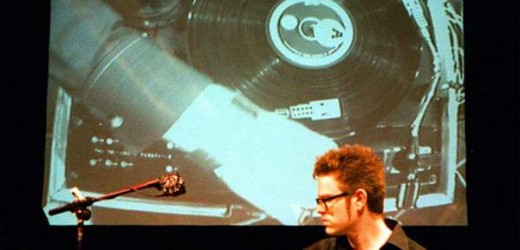
selected solo improvisations with stereo dj mixer

edition 0f 1000

For a moment, in the early parts of the first piece I thought Goh Lee Kwang had extended beyond his usual turntable and mixer feedback by adding skipping CDs, but it turned out the copy I have is a bit scratched. Too bad as that could have been a nice addition. When I studied the cover more closely, it seems that there is no turntable either, and Goh Lee Kwang just uses a stereo DJ mixer. According to his website, the material was recorded at six studio sessions (in Stuttgart, Rotterdam, Krems, Kuala Lumpur, London, Amsterdam) plus two concerts (Paris, Stuttgart), but the cover just says ‘all tracks recorded in Steim, studio 1, Amsterdam. So what is right? Does it matter? Not really. Goh Lee Kwang uses lots and lots static cracks, feedback like sounds, in a collage like manner. It sounds like a turntable, I thought, but then every time I had to think ‘oh, it isn’t a turntable’. It was pretty decent stuff, but way too long to hold my interest. The five pieces last for about seventy minutes, and it wouldn’t be a problem, but the variation isn’t that much, so one could all too easily think it’s the same track. Only the fifth piece is considerable louder than the rest, but if that is the ‘variation’ than I pass. Half of this would have been equally fine, me think, and it would still be a pretty decent release.

(thank you Frans de Waard of Vital Weekly)

outtake (2min-, 256kbps)

outtake (2min-, 256kbps)

Label Goh Lee Kwang Contact

recorded by goh lee kwang at the STEIM, Amsterdam, May 2007.

editing & mastering by goh lee kwang 2007.

image by lau mun leng, design by herbal in house design team.

no pre-programing, no on-going effect, no post-overdub. no turntable.

Audio CD 70min++

price : 15 eur

image

1776

If you enjoyed this post, make sure you subscribe to the RSS feed!

Eric Cordier OSOREZAN


image


Eric Cordier OSOREZAN

Selected field recording

1993 – 2007

Notes:

Osorezan, (la montagne de la peur)

L?air dans l?eau

L?air dans l?air

L?air et l?eau

Recorded in Niseko, southwest of Hokado and in Osorezan, northern of Honshu in August 2006. Gas emanation of volcano in Japan. The sound recordings were carried out in the depths and then re-organised. We listen to gas bubbling in water, gas mouths, gas that creates rhythms while escaping from under a dead leaf down in the clay, whistling?All panoramic movements, repetitions, effects of phasing have been carried out during the time of the recording, travelling at the mouth to gather the sound of sulphur gas as a sound

Eric Cordier

Currents works :

He plays solos of electronic music under the name of NOL (20 concerts during the past 4 years), work on sound-sculptures with Denis Tricot: the Wooden Organ (21 exhibitions in the past 4 years & 10 more to come), a performance/action/body art project call Ruderal with Satoko Fujimoto (sound) ; and plays in several improves bands Enkidu, Suture, Pheromone?.

He also composed tape music that have been premiered in various festivals especially during the year 2006 after comand on the themas of animal (Excentrique/Chaumont-Loire) and mineral : reconstitution of the sonic identity of La Fert-sous-Jouarre city before world war II and the fall of the local stone industry ?Meulire?, festival Mmoire Vives, La Fert-sous-Jouarre. 15 concerts of tape music under the name/themas ?art & travail/Pied d?ne? has been done during the 2 last years with Denis Tricot in doing performances when he built the sculpture in front of the audiences at the same time.

Studies :

He has studied fine arts, body-art & music. He is both interested in popular culture and academic. In 2002 he earned a PhD in Ethnology/Religious Science in analysing the popular culture of the peasants of the Normandy during the XIXth century. Some articles are available in French on werewolf, fairies, elves, goblins, imps, bee honey, and the opposition between wild and domestic animals. He has done recordings of popular music : Lu Sheng dance and songs in a Thai minority of China, the Dong for ethnology.

Previous works:

He worked 2 years at the contemporary music studio Grame in Lyon (87-89, national service) and as a composer (89-91) and after at the contemporary music studio La Grande Fabrique Dieppe (92-98). Since then he work in his own studio.

As he worked as an archaeologist he had study fine art and began to do body-art performances/tape music between 1986 and 1994 under the name of Nadir, with Jean Luc Guionnet and Ccile Maupoux (21 performances in France, Germany and The Netherlands). He was a sound engineer on the Industrial-EBM band The Grief during tours in 1990 and 1991: The Netherlands : Nijmegen, Utrecht, Hoorn, Amsterdam; France : Paris, Montpelier, Saint-Malo, Portugal : Coimbra, Funchal (Madera). He was also sound engineer for contemporary music concerts as M. Kagel and theatre tour since 1989. He plays hurdy-gurdy in various improves, free-rock or industrial bands : UNACD, Schams, Phromone, Tore, Enkidu.

He was credited with introducing Keiji Hayno to the hurdy-gurdy in November 92, as well as Jim o’Rourke in October 95. He has played in the Duet with Dominique Regef (Malicorne). His interest in fine arts and music is conjugated in sound environments exhibitions. There has been around twenty exhibits in 10 years: References : Festival Tramway Rouen, Aronef Lille, CREDAC Ivry, Traffics Nantes Member of the team of programation of festival Tramway 95-96 : K. Brotzmann/Massaker, Alboth, Painting, Denis Colin trio, Berthet/Le Junter, Deux fois rien (A Spirli), Hint, Prohibition, Kinobits (Noetinger/Tanaka/Zetel/Le Quan), Thierry Robin, Alejandro Vinao? Radio producer at the national French radio France Culture : Tentative premire/Clair de nuit, Nuits Magntiques 1991, “La Lisire de Fort” & various Atelier de Cration Radiophonique with J-L Guionnet, E La Casa, Toy Bizarre?

Selected discography :

Solo works :

-”Breizhiselad”, CD, 73?, Erewhon (B), 2006.

-”Digitalis purpurea”, CD 53?, Ground Fault (USA), 2003.

-”Houlque”, CD, 73?, +Livret/Booklet, La Grande Fabrique (F), 1996.

-”Hierre”, CD various artistes, Erratum #2, 19′ 39″ Erratum (F), 1999.

Afflux (vernacular music, project with Jean Luc Guionnet & Eric La Casa)

– “Air stream/Water stream : Aizier, Dieppe? “, CD 70′, Edition?, (USA), 2002.

– “Bouquetot/Paris/Port-Jrme”, CD 70′, Ground Fault, (USA), 2002.

– “TNT”, CD 72′, And/Or, (USA), 2006

Track list :

Osorezan 19:53

L’Air dans l’eau (05:48)

L’Air dans l’air (04:33)

L’Air et l’eau (09:31)

Transbordement 07:50

Dekishima 02:19

Le feu de Saint Clair 14:20

Le Montage du feu (07:13)

Les Tintenelles et le feu (07:03)

Par temps Sec 18:11

Eric Cordier OSOREZAN

1760

If you enjoyed this post, make sure you subscribe to the RSS feed!

Hide this content.