Konk Pack . Off Leash


image

Off Leash is the third release of the delicate high-energy trio Konk Pack – founded in 1998 and made up of Thomas Lehn on EMS-synthesizer, Roger Turner on drums and Tim Hodgkinson on la-top steel guitar and clarinet.
Big Deep (1999, GROB 102) was a selection of their first concerts: Warp Out (2001, GROB 323) was the first studio recording. Off Leash is a live recording again, from a concert in Utrecht in 2001 that was made under most favorable conditions conceivable. The sound is superb, the details of the live performance can be heard in the CD’s tonal image, the instruments are present and clear. If you close your eyes, you can easily imagine sitting directly in a stirring concert. But what are the best recording conditions worth with the music cannot keep with them?


Off Leash bears up to the musicians’ critical ears. For the first time they are so convinced of their own concert that they found it valuable to release it in its entirety on a CD. (This, by the way, is why the CD is only being released now: they listened to the music again and again, checked it, compared it to other recordings, and then it was mastered by Thomas Lehn in the end.) For the first time, Off Leash offers the opportunity of following an entire Konk Pack improvisation in real time, without any post production dramaturgy and cosmetics. The extremely powerful passages, their legendary free punk, is in a perfectly balanced proportion to the peaceful, sometimes fragile, passages that nearly crumble apart.
The music is both: it is consistent, like of a cast, like from a group that had played far more than 100 concerts (which is seldom in the world of improvised music); the music, however, is also eruptive, often surprising, fragmentary and heterogeneous. The music from Konk Pack is the contradiction made productive: finely engraved tonal work and hard free punk are not placed non-reconcilably next to each other; in fact, they determine each other
An essential reason for this is the radically horizontal improvisational method of the musicians. All three constantly play with each other. There is no fore or background, no soloists and no accompaniment; in general no solo and no “feature” of one individual. The system “Konk Pack” means that each has to constantly keep the other two in his ear. Their music is and remains consequently collective. Off Leash, the Utrecht concert, is currently the best live recording of their holy palaver.
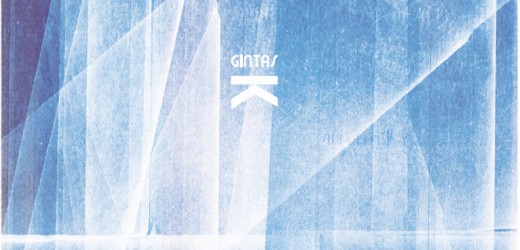
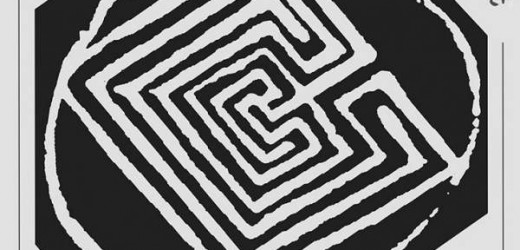
The cover art work is from Tim Hodgkinson and Roger Turner. Grob

Discogs

Drums, Percussion, Other [Cover Drawing, Cover Design] - Roger Turner
Producer - Felix Klopotek
Steel Guitar [Lap], Other [Cover Design] - Tim Hodgkinson
Synthesizer [Analogue], Mastered By - Thomas Lehn

→ Download

download

Downloaded times.

cc
report broken link

If you enjoyed this post, make sure you subscribe to the RSS feed!

Tim Hodgkinson . Sang


image

Tim Hodgkinson’s new album is another intense collision of contemporary classical music and rock energy, the latest in a series he initiated with ‘Each in his own Thoughts’ and ‘Pragma’. Perhaps best known as a founder member of seminal avant rock group HENRY COW, Tim has since displayed many personalities: as an angry post punk Hawaiian guitarist in THE WORK, as post-noise/end of the world jazz explorer in GOD, and as a “free” improviser, as on his recent tour with KONK PACK. He was outed as a classical composer In 1994 with the release of “Each In Our Own thoughts”, which partly drew on material originally conceived for Henry Cow, and introduced new pieces composed with sampler and computer.


The combination of played, sampled and computerised material was further developed in 1998’s ‘Pragma’, leading to suggestions of a new all embracing musical language. This language has found its perfect expression in Sang, and the four major compositions show a maturity in Tim’s writing which is extremely impressive. THE ROAD TO ERZIN pits a crazed solo viola against electronics, with a supporting cast of piano, saxophone and percussion. It is a tribute to the musicians of central Asia, where Tim has travelled extensively. GUSHe takes its inspiration from Iranian modes, conceived as a repertoire of motifs; a b flat clarinet does business with a backdrop of processed electric guitar and drums. THE CRACKLE OF FORESTS is the climactic centre of the album, a high-octane orchestral attack that flattens the listener with its mad complexities and frantic cross rhythms. The album concludes with M’A, a montage piece which draws material from Tim’s composition EXAM, for wind orchestra, and fragments of his second string quartet. Centre stage is the voice of Federica Santoro, whose extraordinary vocals are processed and then catapulted into a strange world of competing orchestras, percussion and sound effects.

What is so effective in Tim’s recent work is the requisitioning of rock production techniques; through the use of sampling and sound manipulation, the virtual orchestra hits the speakers with unprecedented force. What might seem a contradictory vision emerges as a wonderful amalgamation of composed, improvised, electronic, computerised and yet intuitive music.

“Not all great composers are dead. Some of them even appear in public as rock musicians. Tim Hodgkinson is such a composer” BOSTON ROCK
“Experimental music at its most urgent and exciting” THE WIRE

Amazon

If you enjoyed this post, make sure you subscribe to the RSS feed!

Luigi Russolo . Die Kunst der GerÀusche


image

Russolo was born in 1855 into a musical family, but decided to become a painter upon moving to Milan at the age of sixteen. He first exhibited a group of etchings in 1909 at the Famiglia Artistica, where he met Boccioni and CarrĂ . Together they persuaded Marinetti of the potential for Futurist painting.


Despite this early involvement Russolo painted few works as a Futurist. His principal involvement was as a musician, calling for the integration of unconventional sounds into musical compositions. He developed new instruments called intonarumori (‘noise-intoners’) to replicate the booms, hissing and buzzing of the machine age. He brought his controversial performances to London in 1914 and these expanded to major concerts in the 1920s.

Russolo spent an increasing amount of time in Paris during this decade, perfecting and inventing other instruments. These included the Russolofono, a keyboard capable of combining the sounds of individual intonarumori. Between 1931 and 1933 Russolo studied occult philosophy in Spain. He began to paint once more during the 1940s, holding one-man exhibitions in Como and Milan. He died in 1947.

Tracklisting:

1. Risveglio Di Una Cittа, 1913 (3:50)
2. Crepitatore (0:34)
3. Ululatore (0:41)
4. Gracidatore (0:41)
5. Gorgogliatore (0:24)
6. Ronzatore (0:21)
7. Arco Enarmonico (0:21)
8. Corale 1921 (1:58)
9. Serenata, 1921 (2:38)
10. L’aviatore Dro Op.33 (2:26)
11. Macchina Tipografica (3:14)
12. Canzone Rumorista (3:03)
13. Omaggio A Luigi Russolo Fur Stimme Und Digitale Intonarumori (3:36)

CD accompanying the book of Russolo’s manifesto

Amazon

If you enjoyed this post, make sure you subscribe to the RSS feed!

Eleh . Location Momentum


image

*The long awaited Touch debut from Eleh - one of the most fascinating and mysterious projects in contemporary electronic music* Ever since we heard our first Eleh record back in 2006 we’ve been completely blown away by the precise architecture and conceptual realisation of one of the more mysterious recording projects in electronic music. A succession of eleven vinyl-only releases on Important and Taiga followed, marking the enigmatic figure behind the name as a purveyor of exceptional drone music, exploring analog synthesis with a particular emphasis on the physicality of sound from the very lowest registers of the frequency spectrum. ‘Location Momentum’ is the first time Eleh’s music has become available on a digital format, giving Touch the honour of releasing five long, deeply immersive tracks. The patient deveopment and concentration of resonant acoustic phenomenae on the 20 minute opener ‘Heleneleh’ leaves us breathing slowly and feeling as though our atoms are about to disintegrate like a sandsculpture built on a bassbin. The overlapping drones hit critical frequencies, creating tactile synaesthetic sensations akin to some religious/narcotic experience. The cathedral-set reverbs of ‘Circle One’ further enhance the worship/trip, something we recommend experiencing on a good set of speakers as opposed to headphone for maximum effect (apparently you’re supposed to be 7 feet away from the sound source), putting us into a drowsy, maleable state, but still acutely aware of an immense and insistent presence in control of our senses. By the time you’re onto slow subduction of ‘Observation Wheel’ expect blurred vision and possibly speaking in tongues as par for the course. Finally we’re left open mouthed and drooling at the measured and ultra-precise control of ‘Rotational Change For Windmill’, gradually lowering the pure, unadorned bass tones into a vacuum of abyssal nether regions, enveloping all other tones until we’re in the presence of a mass of tangible air movements, at one with a properly arcane vibe. If the music of Eliane Radigue, La Monte Young or Kevin Drumm has affected your life, this album comes very highly recommended. *WARNING* Do not listen to this album while using heavy machinery or operating a vehicle!

Boomkat

If you enjoyed this post, make sure you subscribe to the RSS feed!

John Cage / David Tudor . Rainforest II / Mureau


image

This historic release of a simultaneous performance by David Tudor and John Cage of Rainforest II and Mureau, recorded live by Radio Bremen on May 5, 1972, preserves the only surviving performance of the second of Tudor’s “Rainforest” series. In addition, it documents one of the precious few recorded collaborations between these two visionaries.


In 1970 Cage composed the piece called Mureau, in which phrases from Thoreau’s journals (in particular, passages which touch on the subject of music) are used as the springboard for an elaborate collage. The resultant fabric combines elements of sense and nonsense, as it veers between contextual meaning and a sort of abstract, linguistic vocalise. In Cage’s public readings of Mureau, he explored a number of performance variables-differences in tempo, vocal timbre, pitch, register, and dynamics. A similar range will be apparent, in fact, when listening to this recorded performance. This simultaneous performance of Mureau and Rainforest II took place in a large concert hall before an audience, rather than privately in a recording studio. Whereas in other performance realizations (such as their legendary Indeterminacy collaboration) the two men had been placed in separate isolation booths, here the two shared the same performance space, so that each could hear and see the other person’s activity. In fact, Cage and Tudor sat quite close to one another at the center of the stage, Cage performing Mureau as a four-channel realization-one live channel against three pre-recorded tracks, all of them his own voice-and Tudor actively engaged in real-time processing of Cage’s vocal material, using it to generate electronic loudspeaker-filter events.

Essential listening for anyone interested in the work of either composer.

New World Records

If you enjoyed this post, make sure you subscribe to the RSS feed!

fenn o’berg . in stereo


image

After a hiatus of almost 9 years, the legendary trio of Christian Fennesz, Jim O’Rourke and Peter Rehberg aka Fenn O’Berg have returned with a new studio album. Technically, the first studio album as previous releases were edits of live performances. They spent a week in Studio GOK Sound, Tokyo to lay down some stunning electronic works. Whereas previously the emphasis was on a chaotic blend of found samples mangled through their mobile computing systems to create a humorous, oddball sound, In Stereo implements a more wider instrumental palette of analog and digital synthesis, guitar, piano, bass and percussion. What they do maintain is the ability to make a near-psychedelic audio blend, where it’s impossible to determine who does what. Released as a CD digipack and deluxe gatefold double vinyl which features an extra slice of classic Fenn O’Berg magic beauty.

experimedia

If you enjoyed this post, make sure you subscribe to the RSS feed!

Alvin Lucier . Still Lives


image

Three new works for pure waves and instruments. Lucier has pioneered in many areas of music composition and performance, including the notation of performers’ physical gestures, the use of brain waves in live performance, the generation of visual imagery by sound in vibrating media, and the evocation of room acoustics for musical purposes. His recent works include a series of sound installations and works for solo instruments, chamber ensembles, and orchestra in which, by means of close tunings with pure tones, sound waves are caused to spin through space.

“I count Alvin Lucier’s Still Lives among the most beautiful recordings I’ve ever heard. Like JanĂĄcek, Lucier’s art stands alone despite the air of detached cool it shares with Lovely Music’s catalog. (Few labels hew to an aesthetic line so tenaciously as Lovely. Mimi Johnson, the woman in charge, is married to Robert Ashley, whose operas set the tone for a significant aspect of “downtown” style.) Lucier’s deceptively simple aesthetic is in fact delightfully complex in the manner in which it reveals horizons. In this release, the composer has purely acoustic sounds (single piano tones, less often chords, and briefly, koto) interacting with electronically created, similarly uncomplicated sounds. The magic – and I choose that word carefully – occurs in the mingling. Lucier takes his time, and so should the listener. I can think of little music better suited to the recording medium. The disc’s eponym, in eight parts, serves as a showpiece for the varieties of soul-touching experience Lucier’s seemingly perfunctory systems permit. The composer’s good notes tell the story. Particular congratulations to Tom Hamilton (a fine composer in his own right) for a wonderfully intimate sound.”
—Mike Silverton, “Golden Ear Awards 2002″, The Absolute Sound
(Mike Silverton is the editor of LaFolia.com)

Album Notes

Track Listing:

1. Music for Piano with Slow Sweep Pure Wave Oscillators (16:31), Marilyn Nonken, piano
2. “On the carpet of leaves illuminated by the moon” (11:46), Ryuko Mizutani, koto
3. Still Lives (25:10), J

Lovely Music Ltd.

If you enjoyed this post, make sure you subscribe to the RSS feed!

Claudio Rocchetti . I Could Go On Singing


image

A label I never heard of, with no less than seven mini CDs, all by artists that I likewise never heard of. Labelmanager Mirko releases anything that he likes, thus crossing boundaries of improvisation, rock, noise, folk and what else. These seven mini CDs are released as the Wallace Mail Series and each comes in a nice envelop like package, silkscreened and sometimes with hand made features.
The series opens with 2partiMOLLItremolanti, being Xabier Iriondo (member of A Short Apnea and Six Minute War Mandness among others and who plays guitars, tapes and live electronics) and Marco Tagliola (who plays with Marco Parente, Sepiatone and Scisma on PC and tapes). Their idea is to melt various musical elements together, elements which are not that common, like rock, musique concrete, electronics and Italian melodies. The CD opens with a strong and energetic drone like piece of reversed sounds, until they fade over in what must be ‘the Italian melodies’. The elements are presented in a linear form, rather than a melted one. The second piece, ‘Mannesmann!… L’Incantatore’, is more based on guitar loops, concrete sounds and vocal screams, but despite it’s intense sounds, less convincing.
The same Xabier Iriondo plays as Ear Now, together with Alberto Morelli. Together they play a variety of instruments, mainly all sorts of keyboards: piano, harmonium, fender rhodes, melodica, farfisa organ but also guitars, sea shells, radio and records. The result are six pieces in which vaguely the drone is the main instrument, but embedded in a more musical form, with tinkling piano notes, guitar strumming and the sound of an old gramophone.
And as Polvere Xabier Iriondo returns again, now with Mattia Coletti, playing acoustic and electric guitars, percussion, organ, glockenspiel and much computer treatment, both in real time and afterwards. Here the music becomes more much freely played, loosely improvised, even when there is apparently some treatment going on. Polvere keeps a fine balance between improvised acoustic sounds and computer treatments in all six, sketch like pieces. I doubt wether a full length CD would still be of interest, but as a miniCD it is indeed quite nice.
A bigger line up is to be found on Four Gardens In One, four persons playing guitars, cymbals, tapes and treatments (and of course Xabier Iriondo is one of them). Their group improvisations evolve around mainly loose guitar sounds and could perhaps be described as postrock, but unfortunately they were all a bit undirected, without too much structure. Things can of course be too loose also…
The fifth release is by Fabio Magistrali (of A Short Apnea and Microapocalypse) and Mattia Coletti (of Sedia, From Hands and Polverde), aka 61 Winter’s Hat. They play a rather free version of singer songwriter stuff, dwelling on drums, guitars, vocals and organ sounds, but all in a rather free mood, not caring too much about melody or rhythm, or a bit of false singing. But the result is quite introvert playing, especially in the opening piece ‘Life In Circular Julies’, with it’s singing and obscured field recordings. Quite a nice one.
The sixth release is by Tangatamanu, aka Alberto Morelli on a bucket load of instruments and Stefano Scarani, also on many instruments. This is the most modern classical in approach. Both pieces (divided in smaller sections) were created for two installations by Studio Azzurro, of whom both composers are a member. Bowed guitars, bamboo-flutes aswell as computer processing play an important role on these recordings, in which they show their skills to produce a highly intelligent sense in combining ‘real’ and ‘unreal’ instruments. Quite intense, imaginative collage music with a strong sense of dynamics.
On the final and most recent addition to the series, I finally recognize a name: Claudio Rocchetti has a couple of solo releases aswell as 3/4 Had Been Eliminated (see Vital Weekly 388, 390 and 423). This is perhaps the most experimental release of the lot. In one piece Rocchetti uses field recordings, audiocassette, turntables and radio and in the other turntables, objects and mouth. This is the most subtle release of the lot too. Rocchetti’s music hoovers most of the time at the threshold of audibility, with careful cracks of the turntables and obscured hum from various, hard to identify, field recordings. The two pieces are put together with great care and are demanding a lot of the listener, but it’s a particularly strong release. (FdW) Vital Weekly 474

Discogs


If you enjoyed this post, make sure you subscribe to the RSS feed!

Lethe . Catastrophe Point #5


image

Catastrophe Point #5 is the latest in Kuwayama Kiyoharu’s signature series of compositions that explore the charged, mysterious atmosphere of disused industrial sites. For this album, Lethe turns his attention to an abandoned warehouse by a pier in his hometown of Nagoya, Japan, using objects discovered in situ to perform a ritual of sonic resurrection. He brings a dead space back to life, giving it a voice and allowing it to speak. Metal chains, sheet metal, broken machinery, and factory debris are bowed, struck, and dragged across the concrete floors of the massive hall, reverberating and responding as Kuwayama and his microphones scuttle across the desolate terrain. Growling cello and unstable horns underscore the torrents of percussive clatter. Catastrophe Point #5 is a haunting album of volatile, malevolent ambiance.

Kiyoharu Kuwayama began working with sound in the late 1980s, using half-scale violin, cello, and found junk objects in the group Minotaure. In 1999, he and violinist Rina Kijima formed the improvisational acoustic duo Kuwayama-Kijima to bring their instruments outdoors and perform in environments with unique acoustic properties, notably underneath a highway overpass and in a construction site. Between 1999 and 2003, Kuwayama organized the five-day-long Lethe.Voice.Festival in an unused grain warehouse.

Lethe’s previous release on Intransitive was Tsurumai, a stellar collaborative CD with Dutch noise legends Kapotte Muziek. He has also appeared on albums with bassist Matt Heyner (Malkuth, Cold Bleak Heat, No-Neck Blues Band), Jonathan Coleclough, Hidekai Shimada (Agencement), Carter Thornton (Enos Slaughter, Izititiz), Kiyoshi Mizutani, and Campbell Kneale (Birchville Cat Motel).

For fans of Christoph Heemann, Surface of the Earth, The New Blockaders, Z’ev, or Organum.

Intransitive recordings

If you enjoyed this post, make sure you subscribe to the RSS feed!

Fred Frith : Step Across the Border


image

Step Across the Border is a 1990 avant-garde documentary film on English guitarist, composer and improviser Fred Frith. It was written and directed by Nicolas Humbert and Werner Penzel and released in Germany and Switzerland. The film was screened in cinemas in North America, South America, Europe and Japan and on television in the United States, Germany, Switzerland, Austria and France. It was also released on VHS by RecRec Music (Switzerland) in 1990, and was later released on DVD by Winter & Winter (Germany) in 2003.
Shot in black and white, the 35mm documentary was filmed between 1988 and 1990 in Japan, Italy, France, Germany, England, the United States and Switzerland, and shows Frith rehearsing, performing, giving interviews and relaxing. Other musicians featured include René Lussier, Iva Bittovå, Tom Cora, Tim Hodgkinson, Bob Ostertag and John Zorn.
The film won “Best Documentary” at the European Film Awards in 1990. A companion “soundtrack” album, Step Across the Border was also released by RecRec Music in 1990.

Step Across the Border is subtitled:
A ninety minute celluloid improvisation by Nicolas Humbert and Werner Penzel.
“Improvisation” here refers not only to the music, but also to the film itself. Humbert and Penzel state in the 2003 DVD release of the film:
“ In Step Across the Border two forms of artistic expression, improvised music and cinema direct, are interrelated. In both forms it is the moment that counts, the intuitive sense of what is happening in a space. Music and film come into existence out of an intense perception of the moment, not from the transformation of a preordained plan. ”
The film is not narrated, and the musicians, the music and the locations are not identified. Instead it is a sequence of snapshots taken of Frith and musicians he has worked with, rehearsing and performing, interspersed with apparent random images of movement (trains, cars, people, grass) that blend in with the music. The improvised nature of the film and its direct cinema approach make it more of an art film than simply a documentary on a musician.
The music in the film is performed by Frith on his own, with others, and by others on their own. Some of the music is improvised, some is composed material performed “live”, and some is previously recorded material played as accompaniment to many of the “movement” sequences in the film.
The recording of the film coincided with the formation and activity of Frith’s review band Keep the Dog (1989–1991), and many of the participants of the band appear in the film. There are even a few rare glimpses of the band rehearsing. RenĂ© Lussier in particular, features prominently and “interviews” Frith about his musical upbringing and approach to music.
The title of the film comes from the lyrics of the song “The Border”, recorded by Skeleton Crew on their album, The Country of Blinds (1986). A “video” of this song also appears in the film. Wikipedia

Recommended Records

Directed by
Nicolas Humbert
Werner Penzel

Writing credits
(in alphabetical order)
Nicolas Humbert writer
Werner Penzel writer

Cast (in credits order)
Jonas Mekas … Butterfly Wing
Julia Judge … Koan vom Klang einer Hand
John Spaceley … Koan vom Klang einer Hand
Tom Walker … Koan vom Klang einer Hand
Ted Milton … Television Dancer
Robert Frank … Old Man in Train
Fred Frith

Produced by
Res Balzli …. producer

Cinematography by
Oscar Salgado

Film Editing by
Gisela Castronari
Silvia Koller

Production Management
Res Balzli …. production manager

Second Unit Director or Assistant Director
Peter Zobel …. assistant director

Art Department
Lecco …. graphic artist

Sound Department
Vera Burnus …. sound editor
Rainer Carben …. sound mixer
Guillermo del Castillo …. sound engineer
Benedykt Grodon …. studio recordist
Jean Vapeur …. sound

Camera and Electrical Department
Dieter Fahrer …. assistant camera
Claudia Kantner …. lighting technician
Oscar Salgado …. camera operator

Animation Department
Lecco …. animator

Music Department
Iva BittovĂĄ …. musician
Hans Bruniusson …. musician
Tom Cora …. musician
Tina Curran …. musician
Jean Derome …. musician
Pavel Fajt …. musician
Fred Frith …. musician
Eric Haapala …. musician
Eitetsu Hayashi …. musician
Tim Hodgkinson …. musician
Marc Hollander …. musician
Lars Hollmer …. musician
Bill Laswell …. musician
Arto Lindsay …. musician: guitar
RenĂ© Lussier …. musician
Fred Maher …. musician
Kevin Norton …. musician
Daihachi Oguchi …. musician
Bob Ostertag …. musician
Zeena Parkins …. musician
Lawrence Wright …. musician
John Zorn …. musician

Other crew
Isabella Obermaier …. unspecified assistant
Juergen Quest …. picture technician

If you enjoyed this post, make sure you subscribe to the RSS feed!